

A Modern Revival: Inside the 1960s Charles Duncan Home of Holly Miskimmin
Nestled in Melbourne’s leafy east, illustrator and interior designer Holly Miskimmin has breathed new life into a 1960s mid-century home originally designed by renowned architect Charles Duncan. Known for his striking geometry and warm materiality, Duncan’s work celebrated natural light, timber craftsmanship, and a seamless connection to the outdoors -qualities that remain at the heart of Holly’s thoughtful restoration.
Honouring Mid-Century Foundations
“I was really inspired by the work of Charles Duncan, who was the architect of this home back in the ’60s,” Holly says. “It was about taking cues from the beautiful materiality he used - the brick texture, the tones, the warmth - and tying them through the rest of the space.”
Rather than reinventing the home, Holly and her family worked closely with the existing structure, celebrating the exposed brickwork, clean lines, and built-in joinery that defined Duncan’s design. Soft furnishings, ceramics, and artwork bring a personal touch, bridging the past and present with a quiet sense of continuity.
Light, Texture, and Connection
Light was one of the defining features that drew Holly to the home. “Another thing we really loved about this house when we purchased it was the way the light came flooding through the windows,” she recalls.
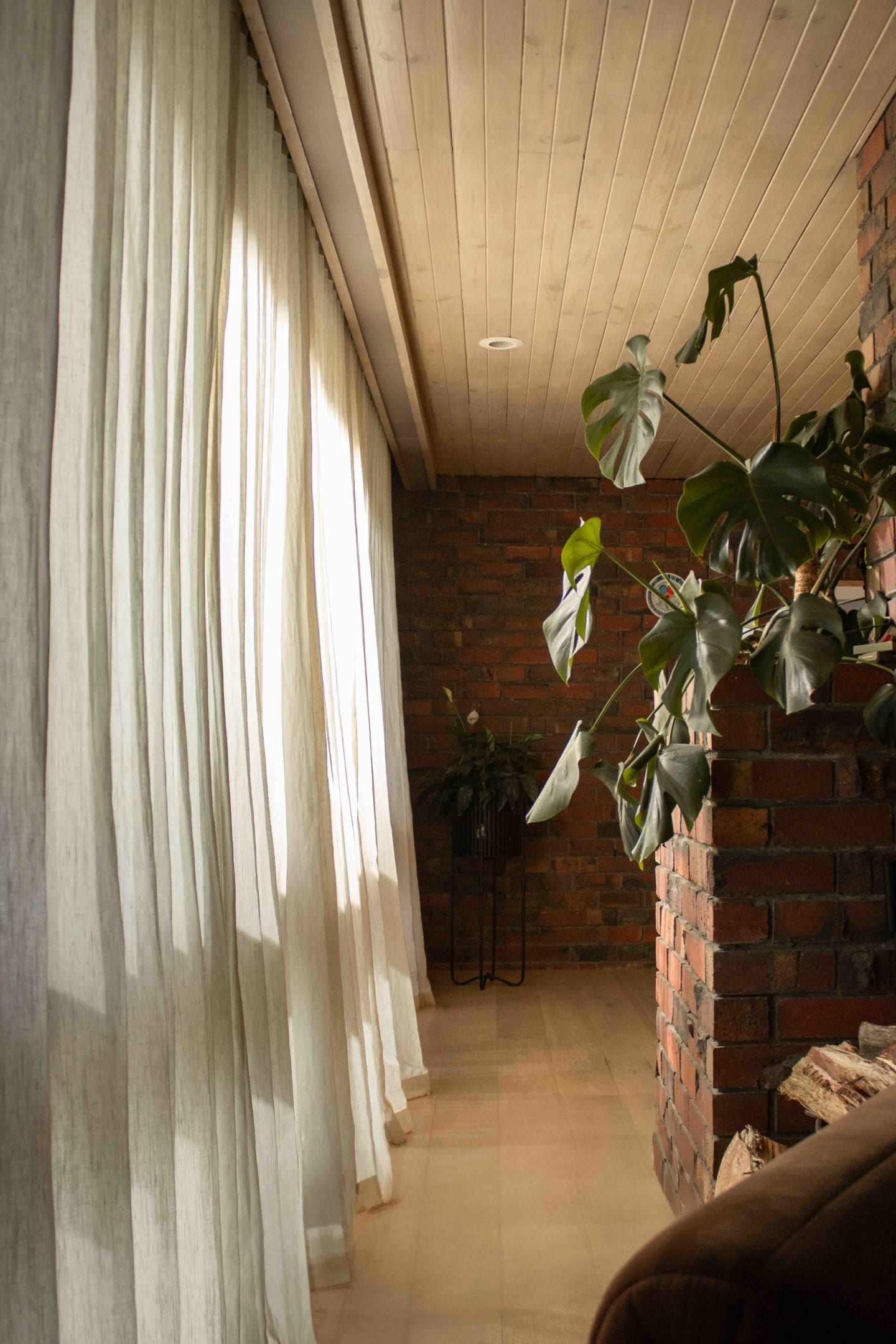
To retain that openness while creating softness and privacy, Holly chose Burleigh Cloud sheer curtains. Their natural linen-look texture diffuses sunlight beautifully, softening the home’s bold mid-century angles while enhancing its architectural lines.
“They help connect the indoors and outdoors,” Holly explains. “They give us privacy but still let the light filter through it’s what makes the space feel calm.”
Throughout the living and dining areas, the sheers add movement and warmth, complementing the home’s original timber details and sculptural forms.
Soft Simplicity for the Kids’ Room
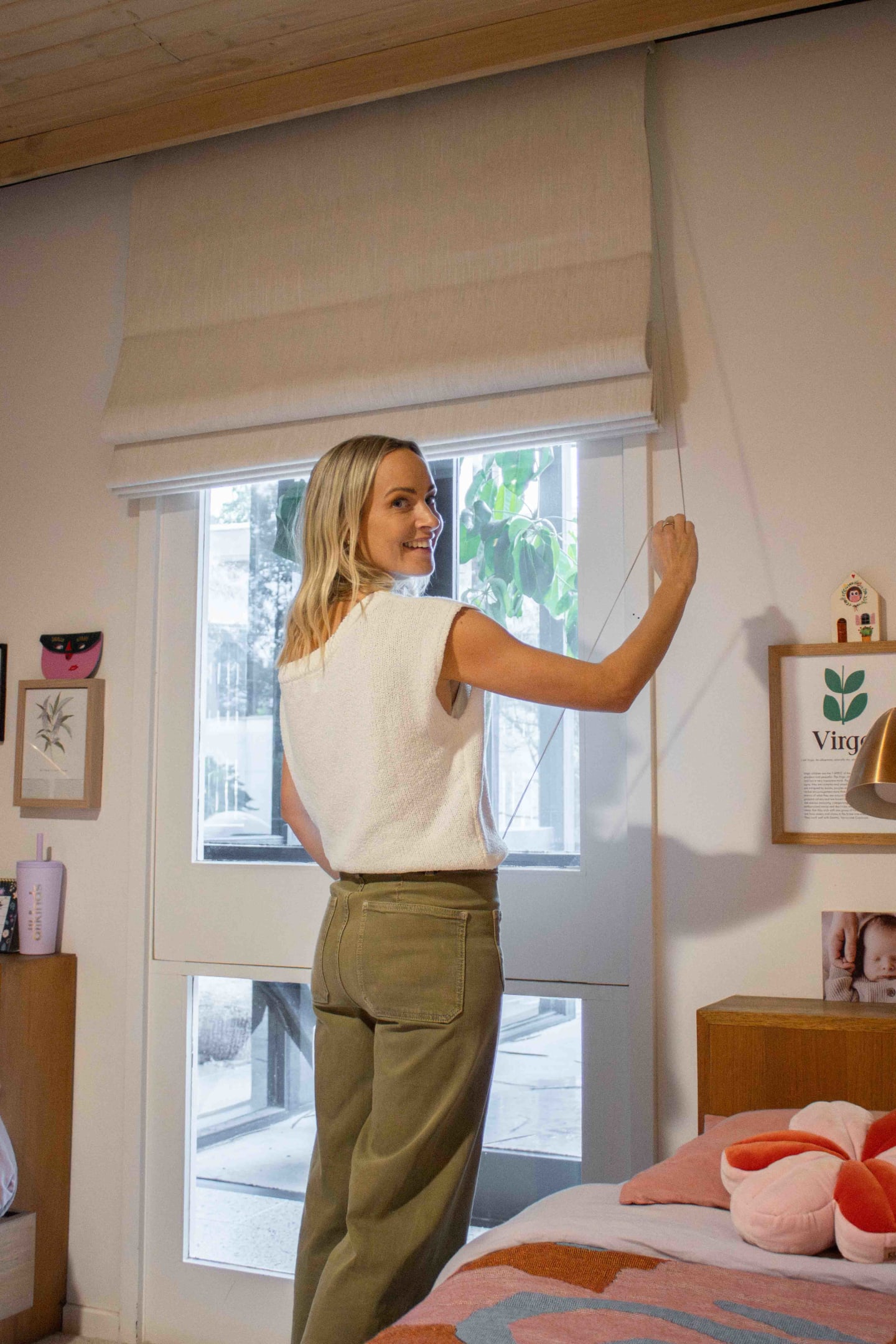
Holly’s eye for functional design extends into the children’s space, where she worked closely with her daughters to make it uniquely theirs. “I designed this room with the kids to reflect their personalities and showcase their artwork,” she says.
To keep the room feeling warm and cohesive, she opted for custom blockout Roman blinds in Linesque, Soba - a practical and beautifully simple solution that complements the home’s clean lines. The tailored folds of the fabric echo the geometry of Duncan’s architecture, while the soft finish adds comfort and ease to a space filled with colour, creativity, and light.
The Heart of the Home
The dining room, still anchored by Duncan’s original built-in table, is the centrepiece of family life. “I styled the space around the table, it’s the heart of the home,” Holly says. “We come together at the end of the day to eat, connect, and share stories.”
Minimal furnishings and a statement pendant keep the focus on the architecture, while the surrounding sheers frame the garden outlook, maintaining the balance between intimacy and openness that defines mid-century living.

Timeless Design, Thoughtfully Reimagined
The home’s sun-drenched living area remains one of Holly’s favourites. “It’s where we have our morning coffee, put a record on, and just enjoy the sunlight flooding through the wide windows and the beautiful fireplace,” she smiles.
It’s these moments, the intersection of architecture, light, and everyday life, that define her approach. The combination of Burleigh Cloud sheers and Linesque Soba blockout Roman blinds weaves warmth and functionality through the home, supporting the rhythm of family life while respecting the elegance of its mid-century origins.
Holly’s revival of this Charles Duncan classic is a masterclass in restraint: preserving the honesty of 1960s design while layering it with contemporary softness. It’s proof that modernising doesn’t always mean changing - sometimes, it’s about letting the original story shine through, one soft layer at a time.