Need design support? We're here.

Get help

XMAS cut-offs are coming

Check dates

What you’ll need to measure

People Icon

1-2 people

Time Icon

5-10 minutes

Tools

  • your tape measure (metal is best)
  • your step ladder
  • a pen and some paper

Before you get going

Have you designed how your shutters will fit?

This is where the fun starts! If you’ve already landed on the perfect fit for your windows, then you’re good to go. Otherwise don't stress, we'll walk you through the design options below.

Are your windows 'normal' size?

'Normal' for us means between 300 mm and 3600 mm wide, and 400 mm to 2600 mm high.

Have you chosen how many shutter panels you want?

You can customise the number of panels for your shutters, though it does depend on your window width and style. We always recommend choosing the least amount of panels possible to maximise light in your home.

Check how deep your recess is.

It's the starting point to designing your fit, so grab a tape measure and take a rough measurement in mm. If you have obstructions measure from the obstruction out to the edge of your window recess.

Do you know what your shutter panels will attach to?

Our shutters attach to most surfaces, though it's always best to do your homework. Wooden window frames and wall studs are by far the easiest to attach to.

'Normal' for us means between 300 mm and 3600 mm wide, and 400 mm to 2600 mm high.

Order your free samples!

Get touchy feely with our designer quality, shutter samples. It's the best way to choose the perfect shade of white for your home.

Designing your dream shutters

The fun starts with designing how your shutters will fit, so channel your inner stylist and get creative! This is about finding your dream look and getting custom shutters that fit and function perfectly.

Inside the window frame Recess fit
Outside the window frame Face Fit
Outside a frameless window Face fit (square set)
Inside the window frame (Direct mount)

Shutters that sit inside the frame are called recess fit:
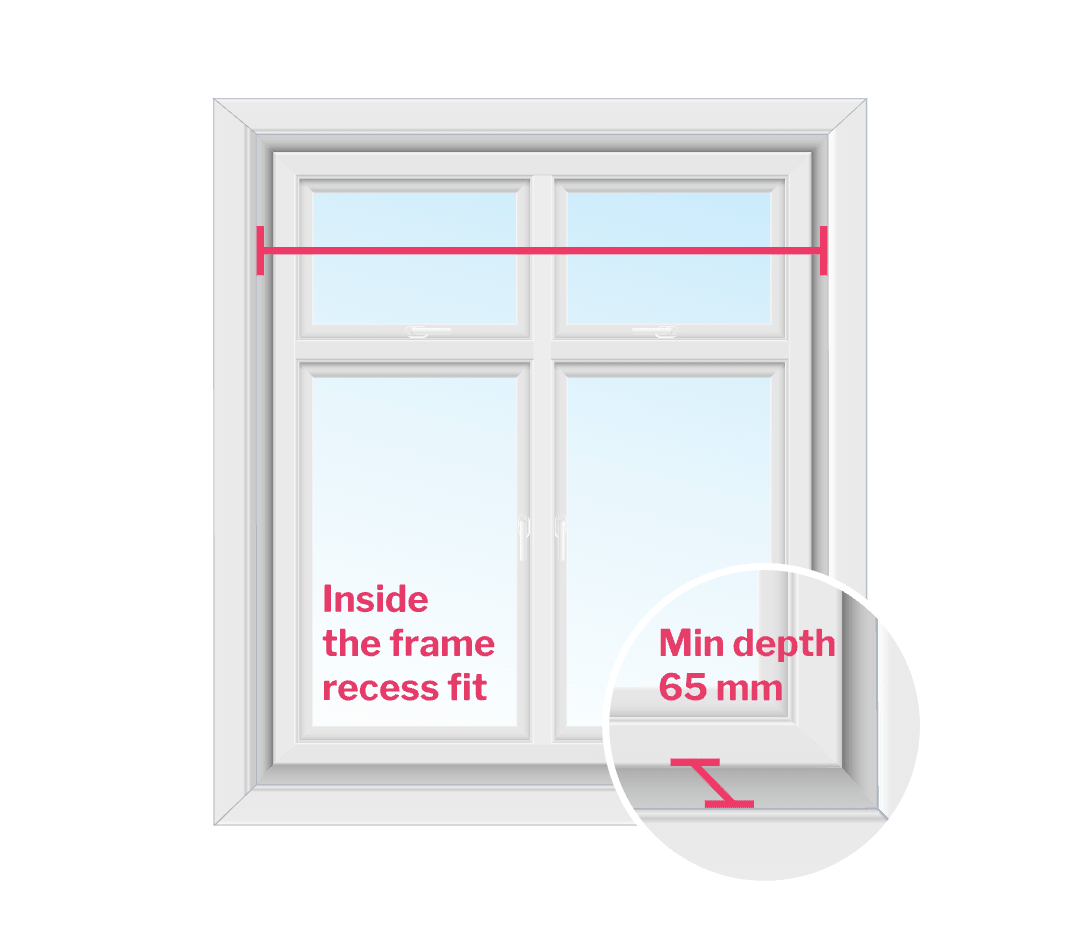
shutters attach inside the window frame for a seamless and sleek look
look fabulous in any room and great for kitchens and bathrooms
perfect if your recess is nice and deep and for minimal obstructions
choose the small L frame for a discreet look or the Z frame for out of square windows
go for a full frame for a symmetrical look or a 3 sided frame for minor obstructions right at the bottom and for window sillslook fabulous in any room and great for kitchens and bathrooms
a direct mount is a no frame option for small windows
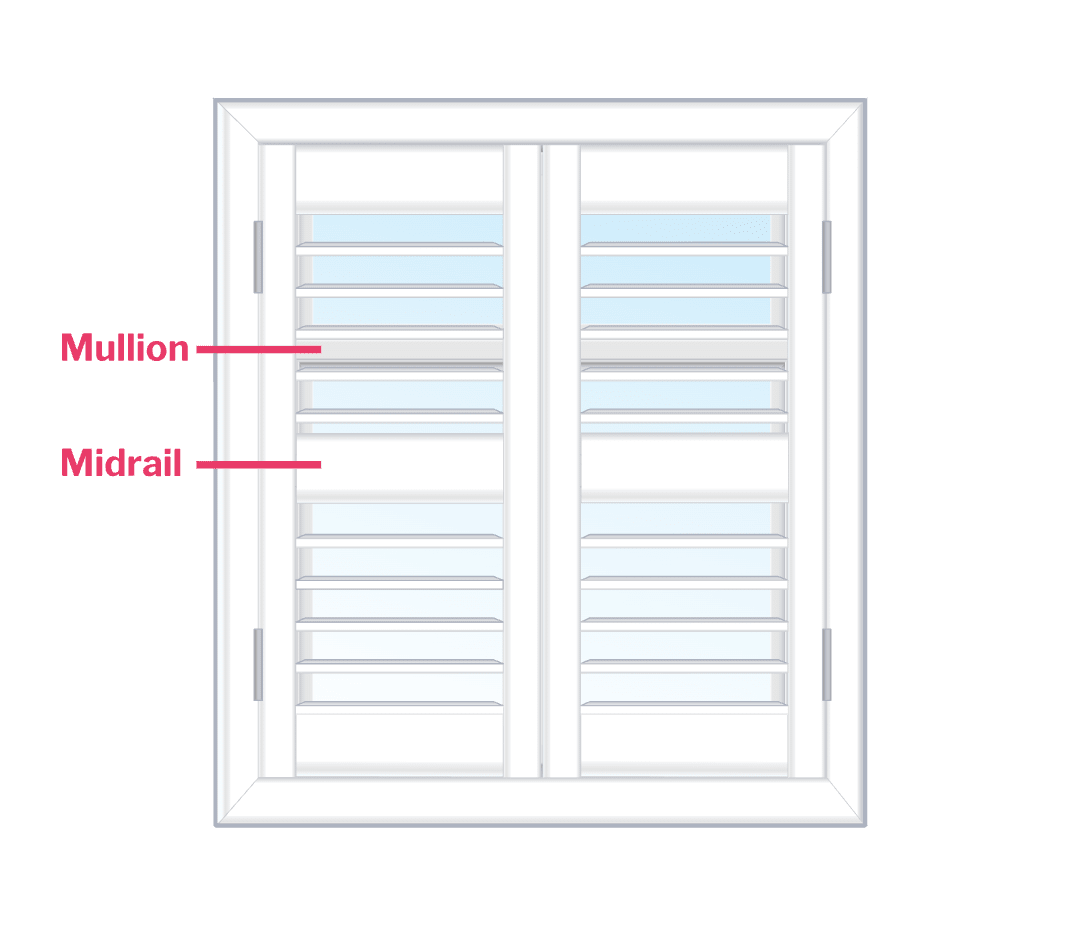
customise your midrail position to match your window
pick your panel and hinge combination (see guide at bottom of page)
match your hinge colour to your shutters, or choose a metal colour to tie in with other features in your home
1
Make a note of your frame option and frame type

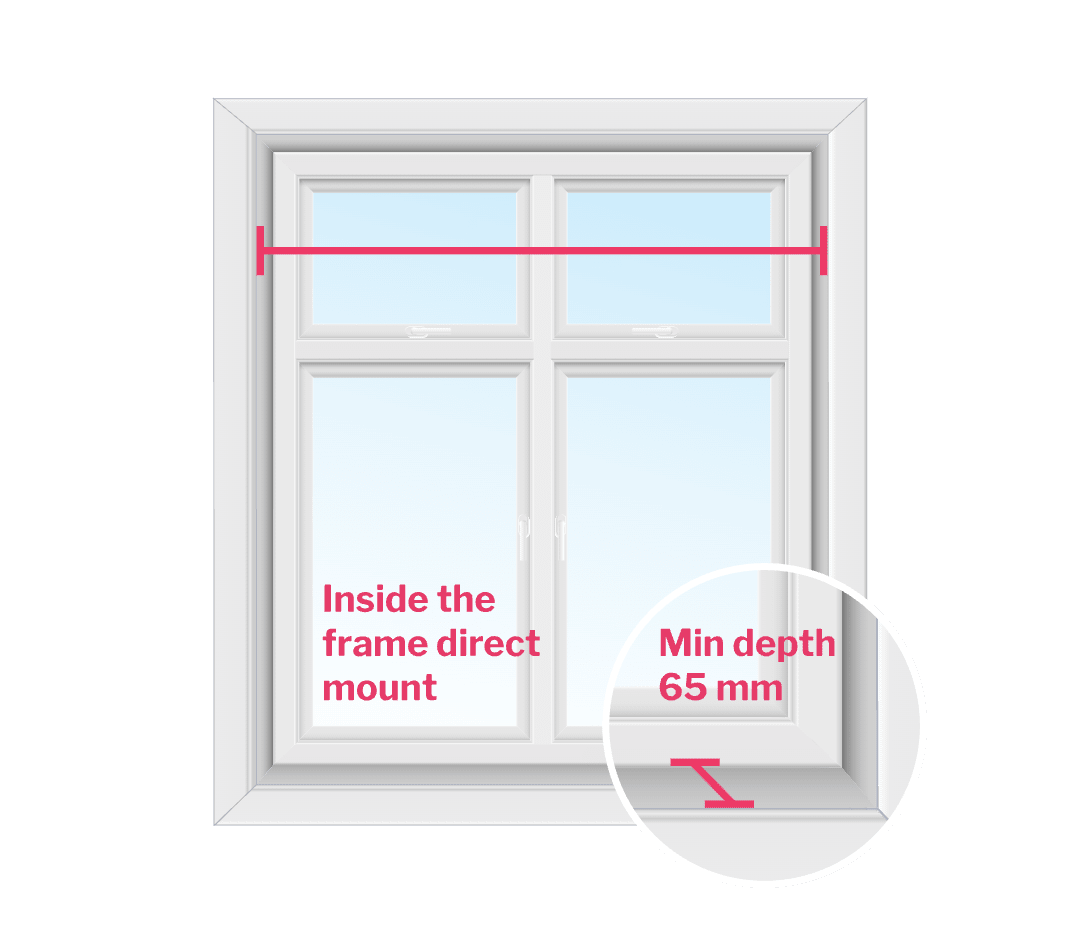
Check that you have a minimum recess depth of 65 mm. If you have obstructions, check the depth is 65 mm from the obstruction out to the edge of your window recess.

Note down which shutter frame type you want. Remember the small L frame is our recommended option. The Z frame is great if your window is out of square.

Also note down which shutter option you want, a full frame or a 3 sided frame, which is great for obstructions right at the bottom and for window sills.

2
Measure your width

Measure the exact inside width of your window frame or recess in three different positions: across the top, middle and bottom. Write down the smallest measurement. This measurement will be your shutter frame width. Don’t make any deductions, we’ll do it for you so that you get a perfect fit.

Contact us if your 3 measurements vary by more than 10 mm.

Example: your width measures 1810 mm across the top, 1812 mm across the middle and 1814 mm across the bottom. You'll take the smallest, and write down 1810 mm.

3
Measure your drop

Measure the exact inside height of your window frame or recess in three different positions: on the left, in the middle and on the right. Write down the smallest measurement. This measurement will be your shutter frame drop. Don’t make any deductions, we’ll do it for you so that you get a perfect fit.

Contact us if your 3 measurements have a greater than 10 mm difference.

Example: your drop measures 2000 mm on the left, 2004 mm in the middle and 2006 mm on the right. You'll take the smallest, and write down 2000 mm.

4
Measure for your midrail position
A

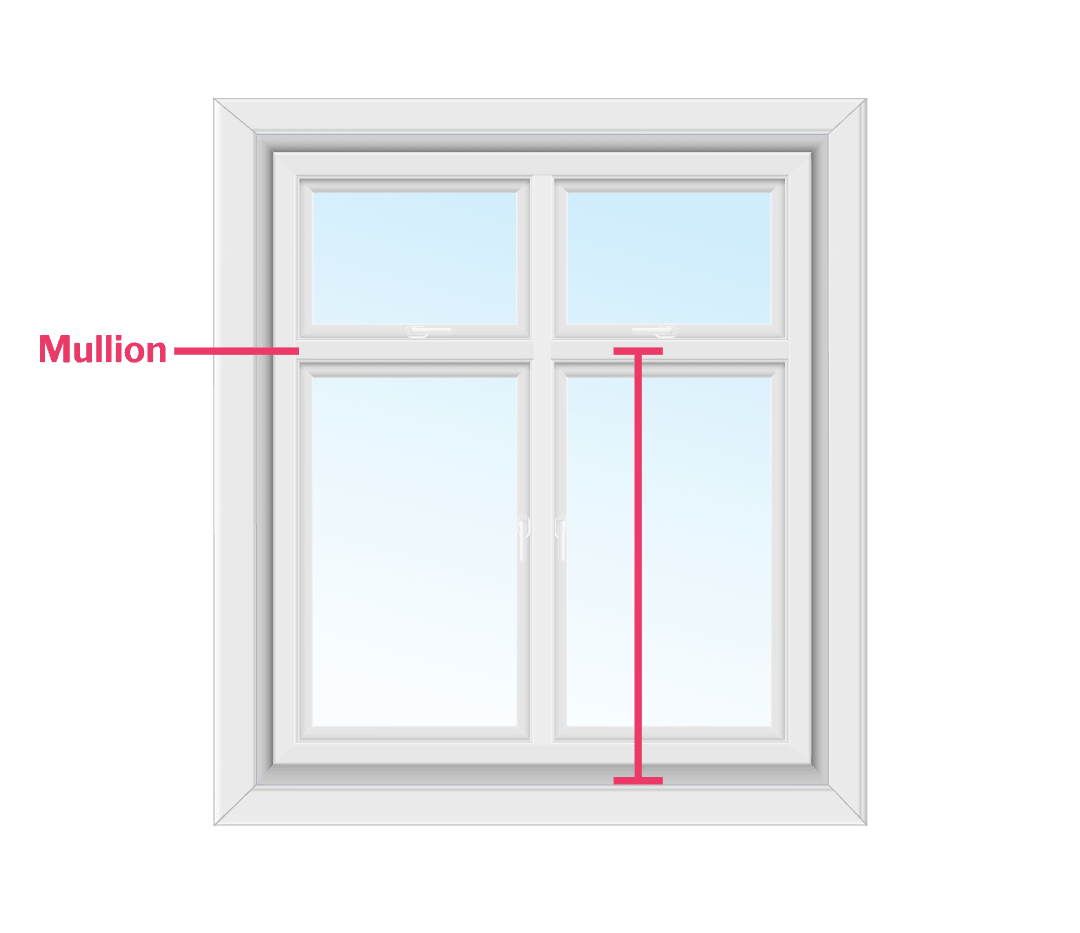
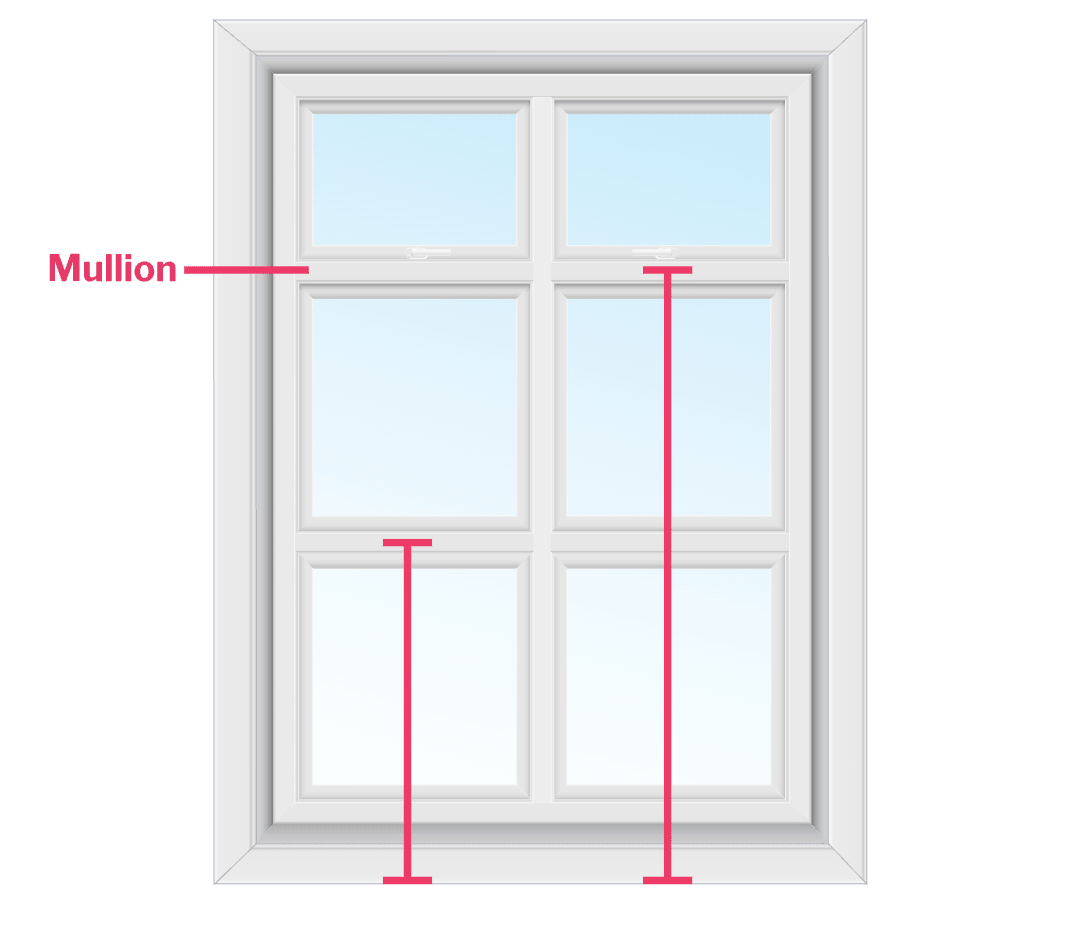
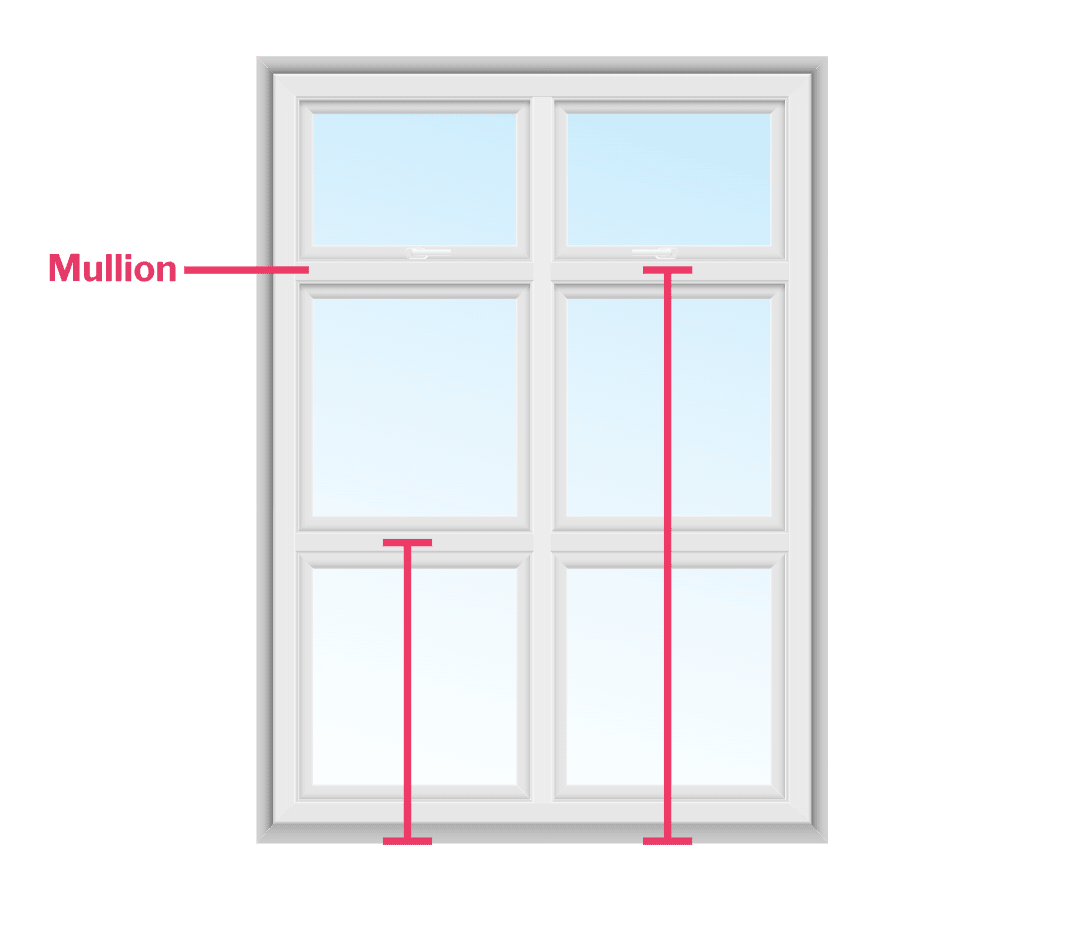
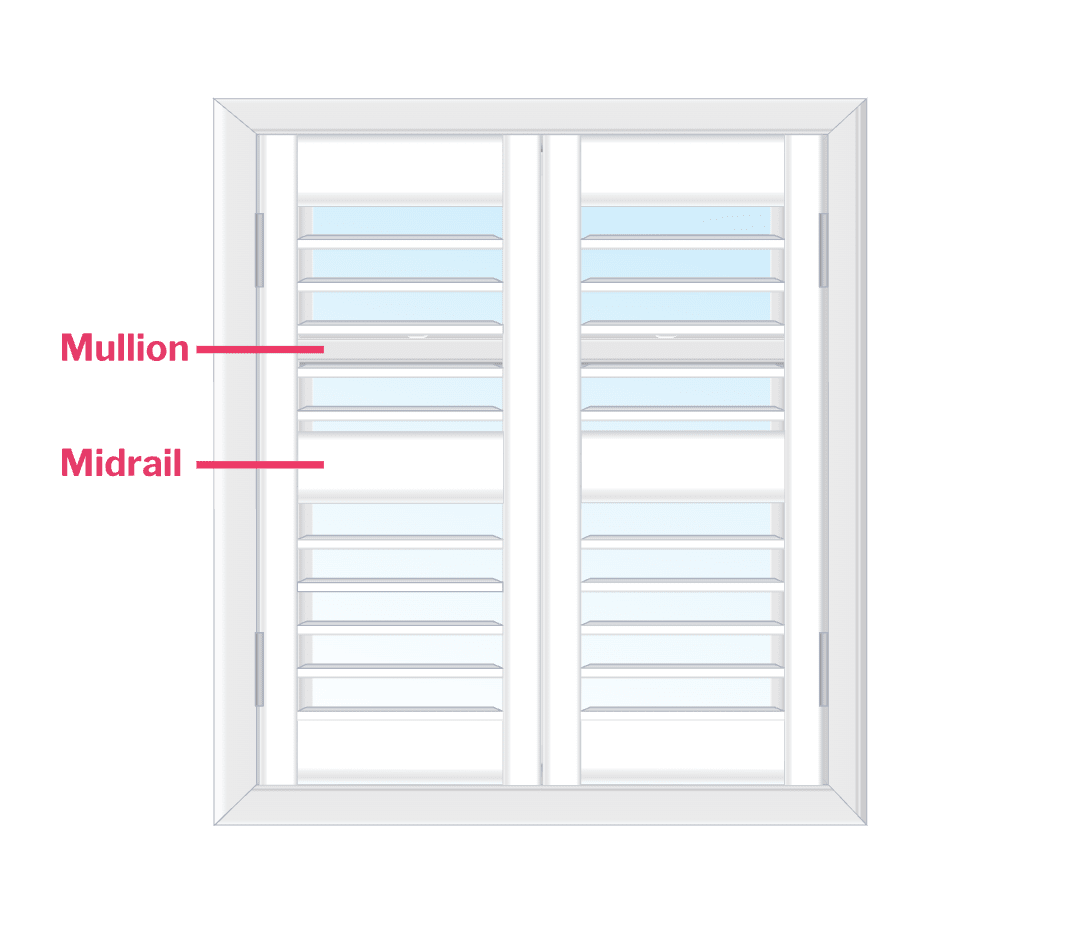
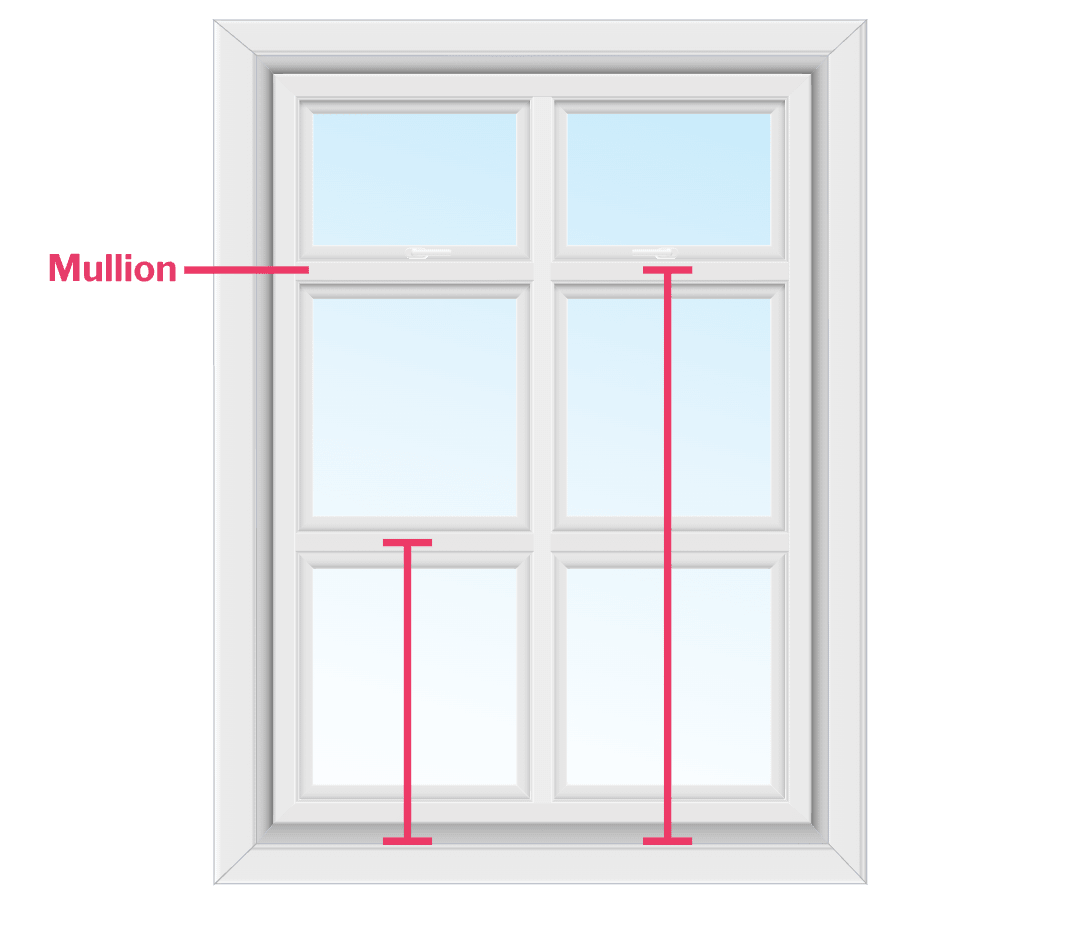
For drops over 1500 mm, measure from the bottom inside edge of your recess, to the mid-point of where you’d like the midrail to sit, and write it down. Position it in line with any horizontal mullions in the window. If you don't have a mullion, go for a position that's not at eye level.
B

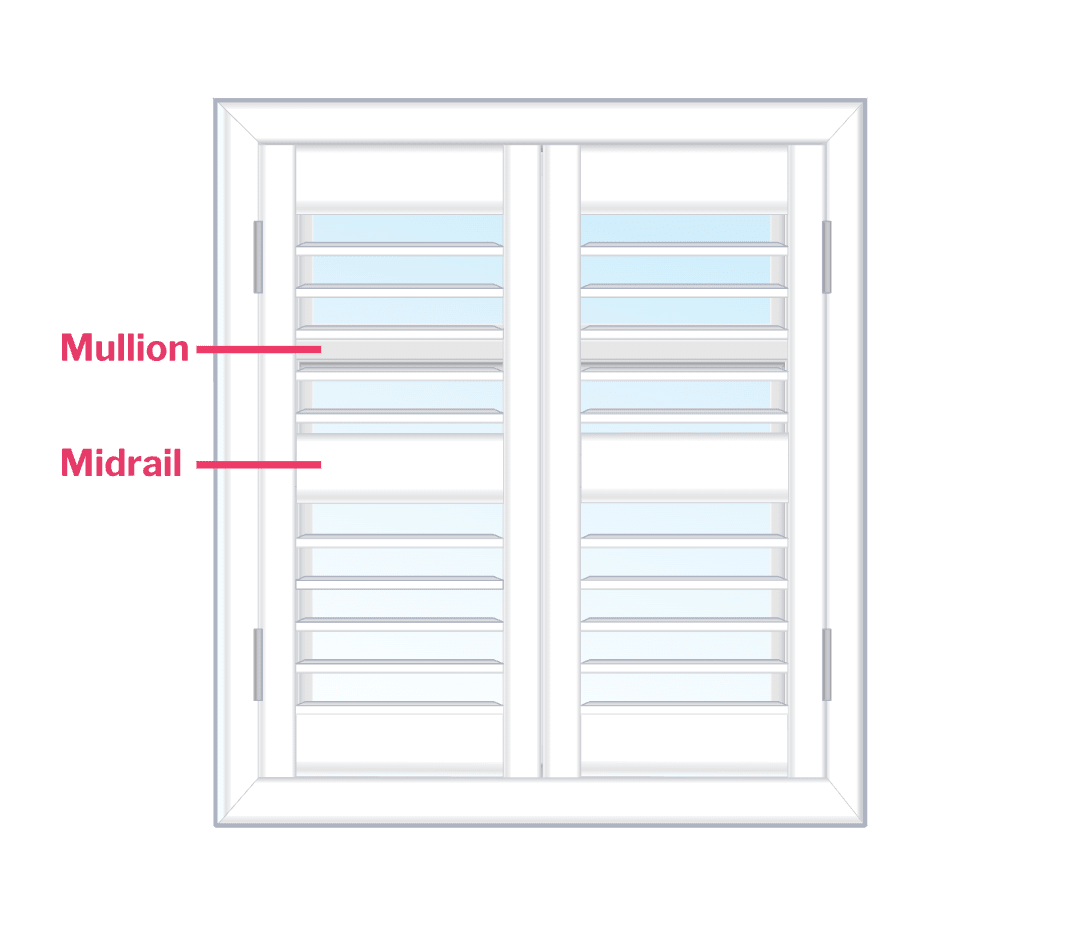
For drops over 2100 mm, you'll need two midrails. First measure from the bottom inside edge of your recess, to the mid-point of where you’d like the first midrail to sit, and write it down. Then repeat for where you’d like the second midrail to sit, and write it down. Position them in line with any horizontal mullions in the window. If you don't have mullions, go for positions that are not at eye level.
C

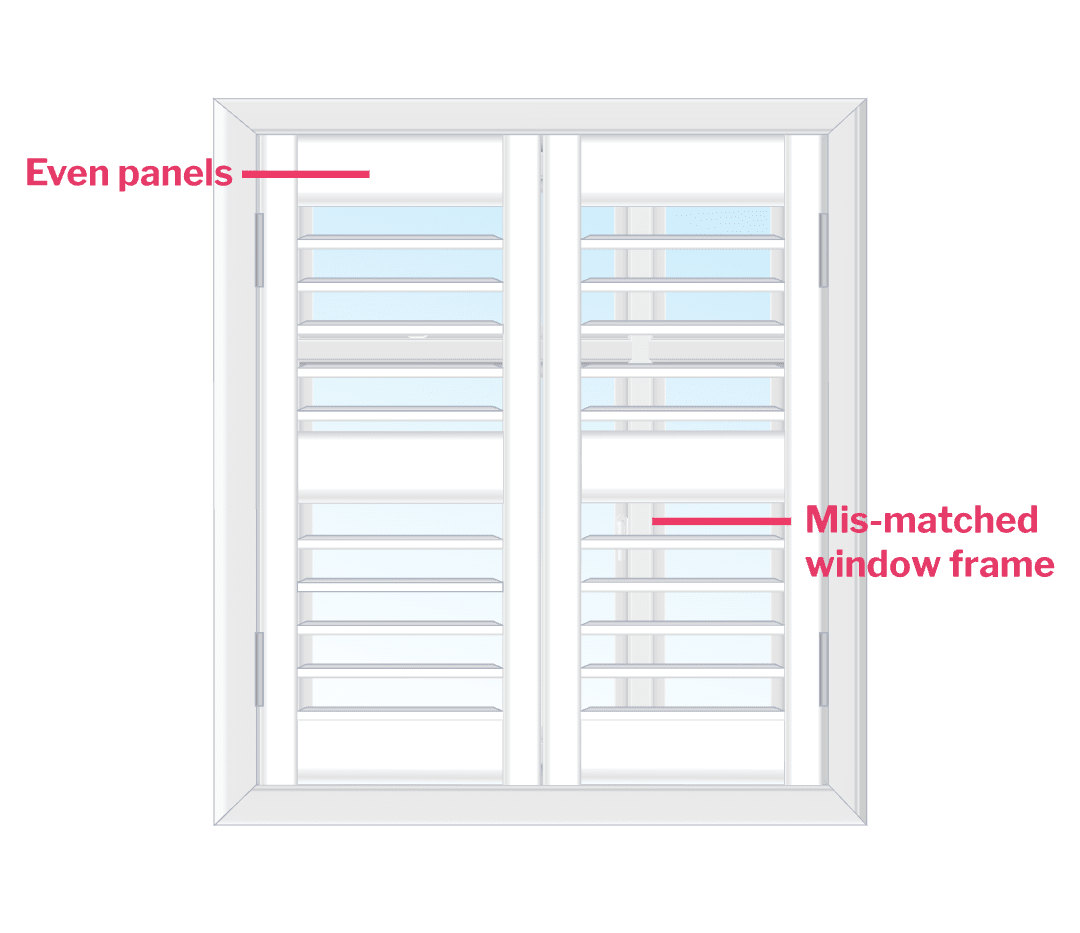
By default your midrail(s) will be spaced evenly if you don't provide measurements. So if you have mullions, the midrail may not line up nicely.

5
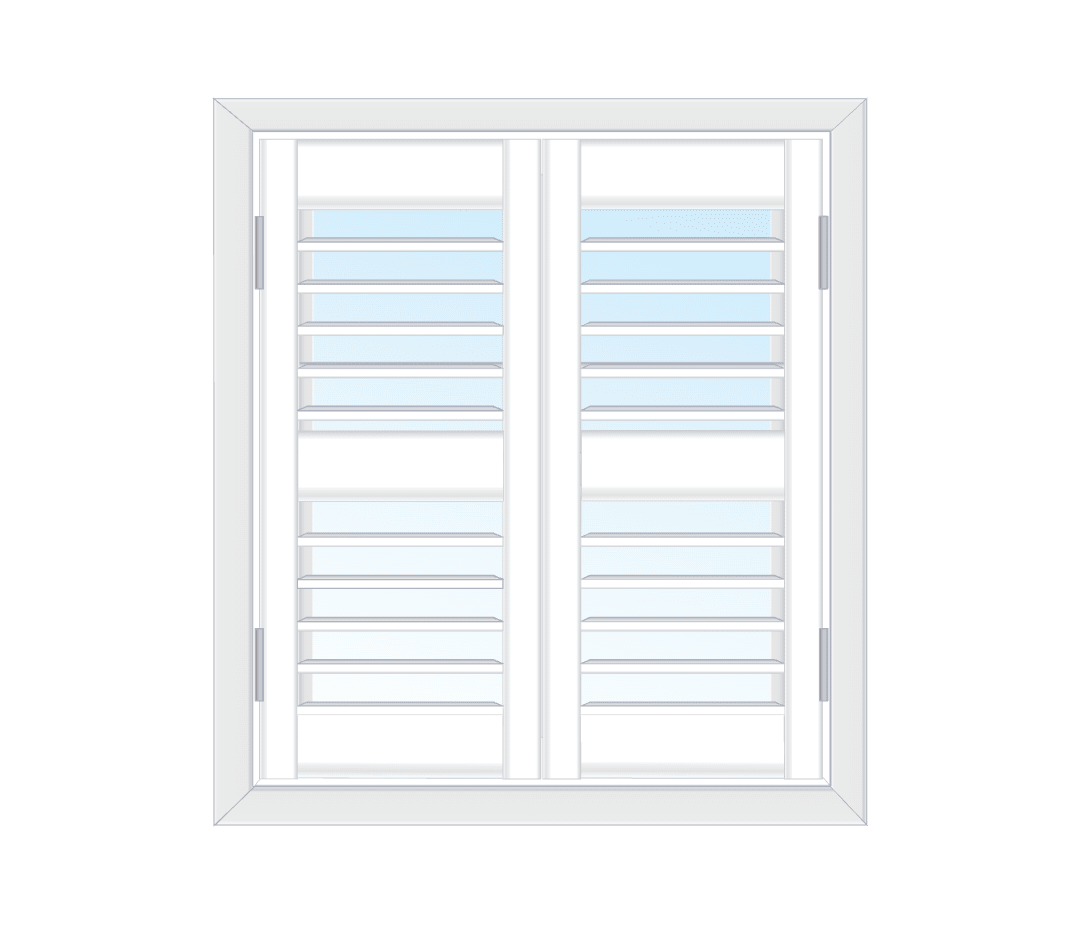
Measure for your T posts (3 or more panels)
A

Make a note of how many panels and which hinge combination you'd like. You can use the guide at the bottom of this page for help and remember the less panels, the more light in your home.
B

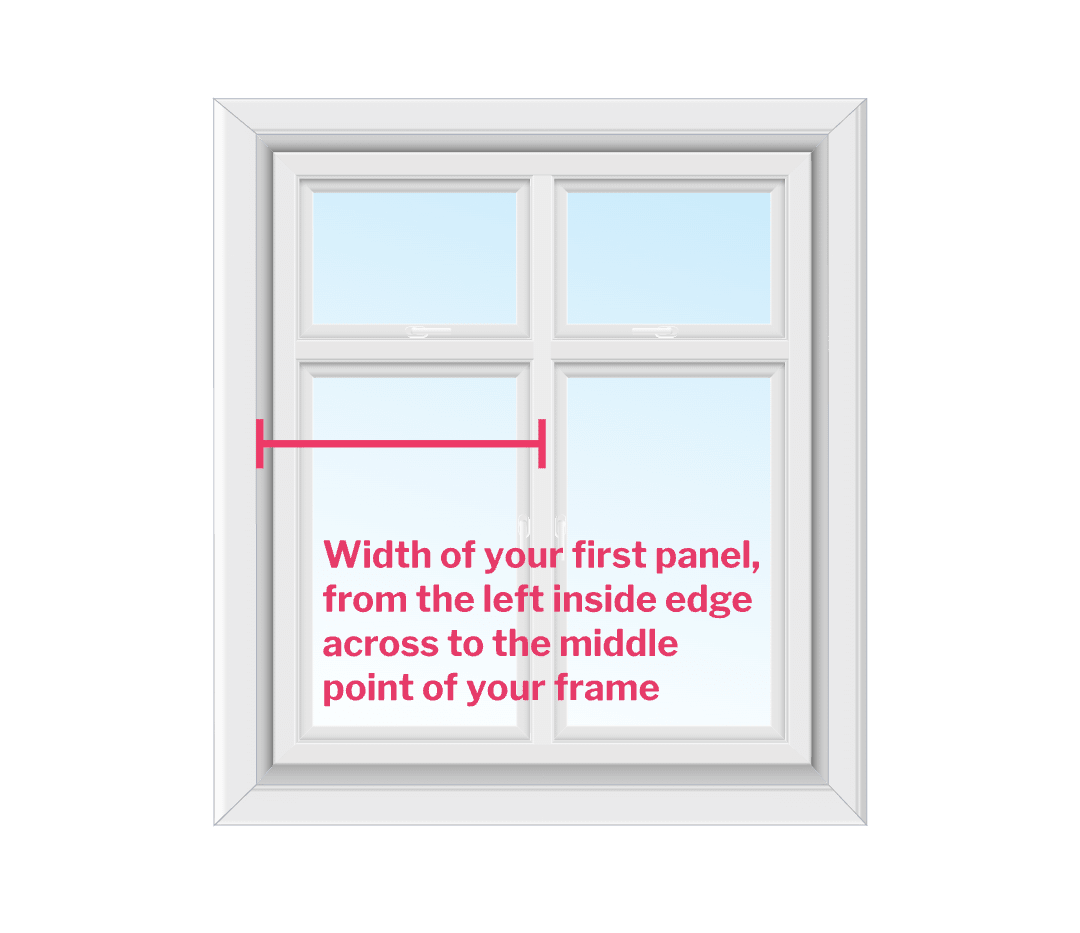
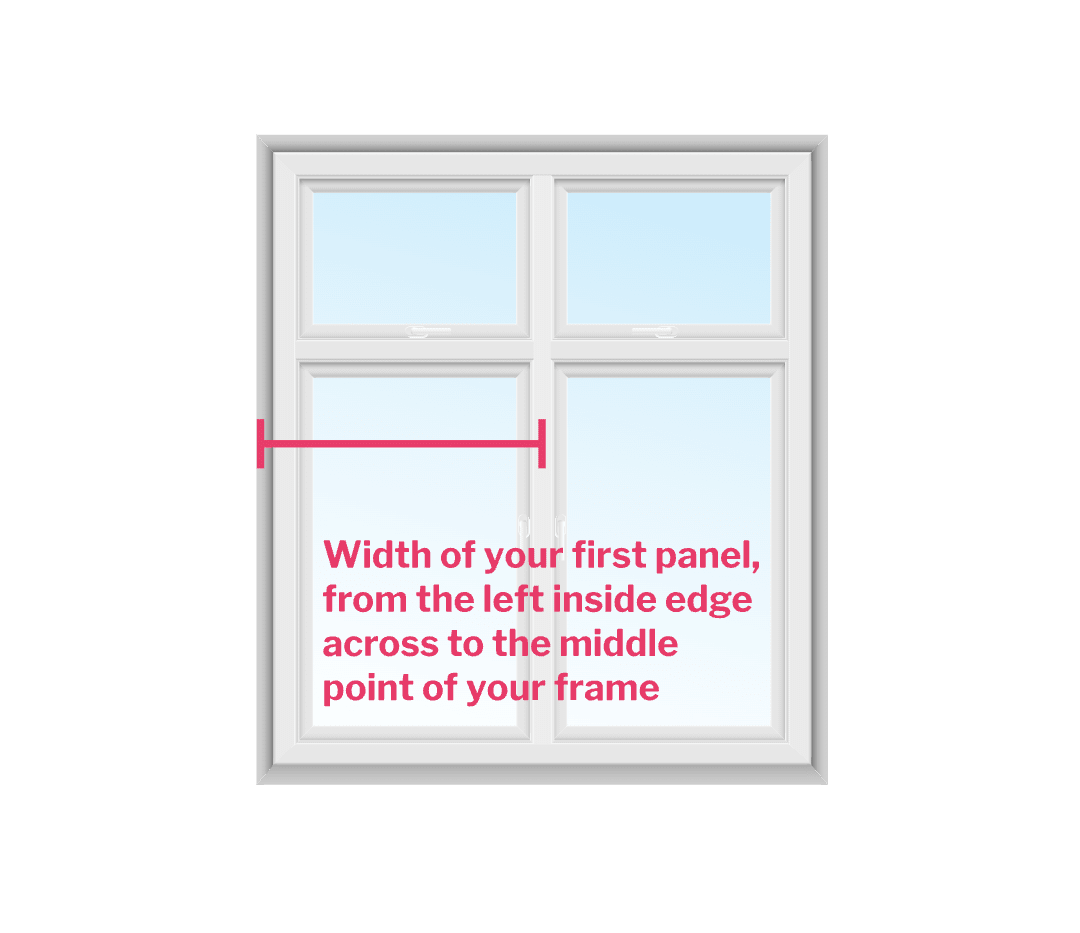
For three or more panels measure from the left inside edge of your recess across to the middle point of the vertical mullion your T post will cover and write it down. Refer to our hinge combination guide at the bottom of the page for T posts positions.

Repeat if you want another T post and start from the left edge. Don't worry about making an allowance for the shutter frame as we'll do all that once you've ordered.
C

It looks incredible when T posts line up perfectly with mullions in your window frames. By default your T posts will be evenly spaced if you don't give us measurements. We recommend choosing the least amount of T posts possible to maximise light.

6
Order your custom shutters online

You're all set to order your shutters!

Design & order

Shutters that sit outside the frame are called face fit:

attached to the part of the window frame facing you
the shutter frame will project into your room by up to 65 mm
look fabulous in any room and great for kitchens and bathrooms
best fit for a shallow recess, to get around chunky obstructions or if your window is really out of square
choose the medium L frame or find an alternative shutter frame using our guide.
go for a full frame for a symmetrical look
customise your midrail position to match your window
pick your panel and hinge combination (see guide at bottom of page)
match your hinge colour to your shutters, or choose a metal colour to tie in with other features in your home
1
Make a note of your frame option and frame type

Note down which shutter frame type you want. If the architrave is over 70mm wide, a medium L frame must be used. A small L frame is not suitable, as the louvres will hit the architrave.

2
Measure your width

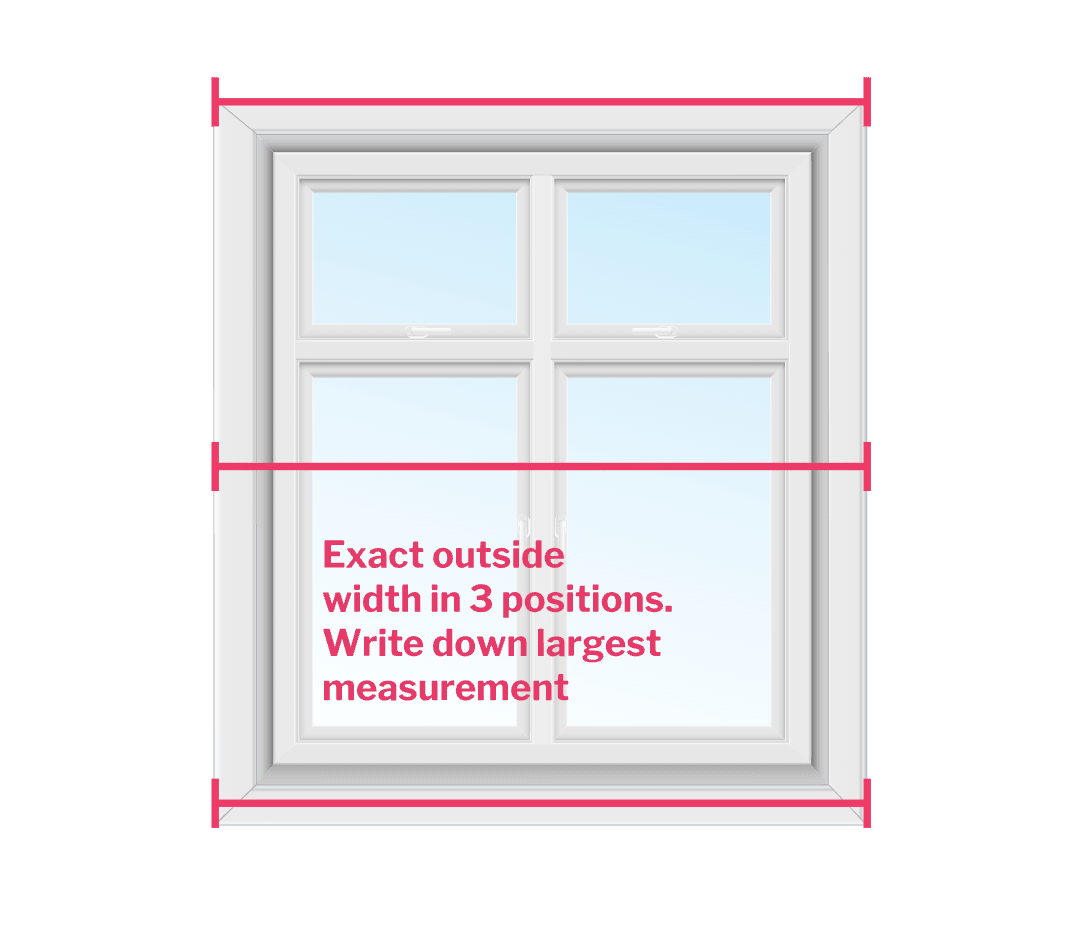
Measure the exact outside width of your window frame in three different positions: across the top, middle and bottom. Write down the largest measurement. This measurement will be your shutter frame width.

Example: your window frame width measures 1810 mm across the top, 1812 mm across the middle and 1814 mm across the bottom. You'll take the largest, and write down 1814 mm.

3
Measure your drop

Measure the exact outside height of your window frame from the top to bottom, and write it down. This measurement will be your shutter frame drop.

If you have a window sill, you'll only measure from the top of your frame down to the flat surface of the sill.

4
Measure for your midrail position
A

For drops over 1500 mm, measure from the bottom of your window frame or window sill, to the mid-point of where you’d like the midrail to sit. Position it in line with any horizontal mullions in the window. If you don't have a mullion, go for a position that's not at eye level.

B

For drops over 2100 mm, you'll need two midrails. First measure from the bottom of your window frame or window sill, to the mid-point of where you’d like the first midrail to sit, and write it down. Then repeat for where you’d like the second midrail to sit, and write it down. Position them in line with any horizontal mullions in the window. If you don't have mullions, go for positions that are not at eye level.

C

By default your midrail(s) will be spaced evenly if you don't provide measurements. So if you have mullions, the midrail may not line up nicely.

5
Measure for your T posts (3 or more panels)
A

Make a note of how many panels and which hinge combination you'd like. You can use the guide at the bottom of this page for help and remember the less panels, the more light in your home.

B

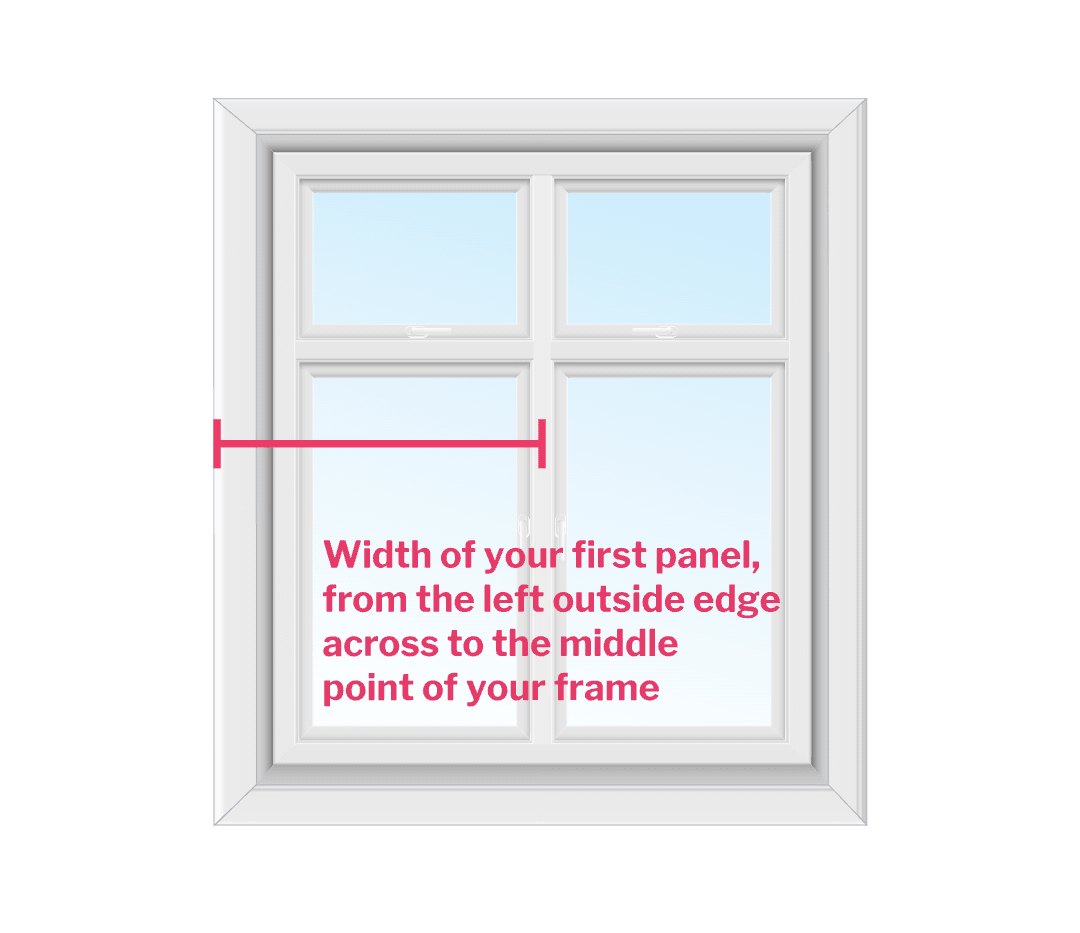
For three or more panels measure from the left edge of your window frame across to the middle point of the vertical mullion your T post will cover and write it down. Refer to our hinge combination guide at the bottom of the page for T posts positions. Repeat if you want another T post and start from the left edge. Don't worry about making an allowance for the shutter frame as we'll do all that once you've ordered.

C

It looks incredible when T posts line up perfectly with mullions in your window frames. By default your T posts will be evenly spaced if you don't give us measurements. We recommend choosing the least amount of T Posts possible to maximise light.
6
Order your custom shutters online

You're all set to order your shutters!

Design & order

Shutters that sit outside a frameless window are called face fit (square set):

shutters are best attached to wall studs, if your walls are plaster
can also attach to concrete, stone, brick or tile
the shutter frame will project into your room by up to 65mm
look fabulous in any room and great for kitchens and bathrooms
best fit for a shallow recess, to get around chunky obstructions or if your window is really out of square
choose the medium L frame, or find an alternative shutter frame using our guide
go for a full frame for a symmetrical look
customise your midrail position to match your window
pick your panel and hinge combination (see guide at bottom of page)
match your hinge colour to your shutters, or choose a metal colour to tie in with other features in your home
1
Make a note of your frame option and frame type

Note down which shutter frame type you want, and remember if in doubt, go with the medium L frame. If you have any obstructions, check our frame guide for your best options.

Remember, our full frame is perfect for outside a frameless window.

2
Measure your width

Measure the exact width of your recess in three different positions: across the top, middle and bottom. Write down the largest measurement. Then add 80 mm to the total width, to account for your shutter frame. This measurement will be your shutter frame width.

Example: your largest recess width measurement is 1810 mm. You'll add 80 mm, and then give us 1890 mm.

3
Measure your drop

Measure the exact height of your recess from the top to bottom, and write it down. Then add 80 mm to the total height, to account for your shutter frame. This measurement will be your shutter frame drop.

Example: your recess height measurement is 2000 mm. You'll add 80 mm, and then give us 2080 mm.

4
Measure for your midrail position
A

For drops over 1500 mm, measure from the bottom of your recess, to the mid-point of where you’d like the midrail to sit, and write it down. Then add 40 mm to the measurement you took, to account for your shutter frame at the bottom.

Position your midrail in line with any horizontal mullions in the window. If you don't have a mullion, go for a position that's not at eye level.

B

For drops over 2100 mm, you'll need two midrails. First measure from the bottom of your recess, to the mid-point of where you’d like the first midrail to sit, and write it down. Then add 40 mm to the measurement you took, to account for your shutter frame at the bottom. Repeat for where you’d like the second midrail to sit, and write it down making sure to add 40 mm to the measurement you take.

Position your midrails in line with any horizontal mullions in the window. If you don't have mullions, go for positions that are not at eye level.

C

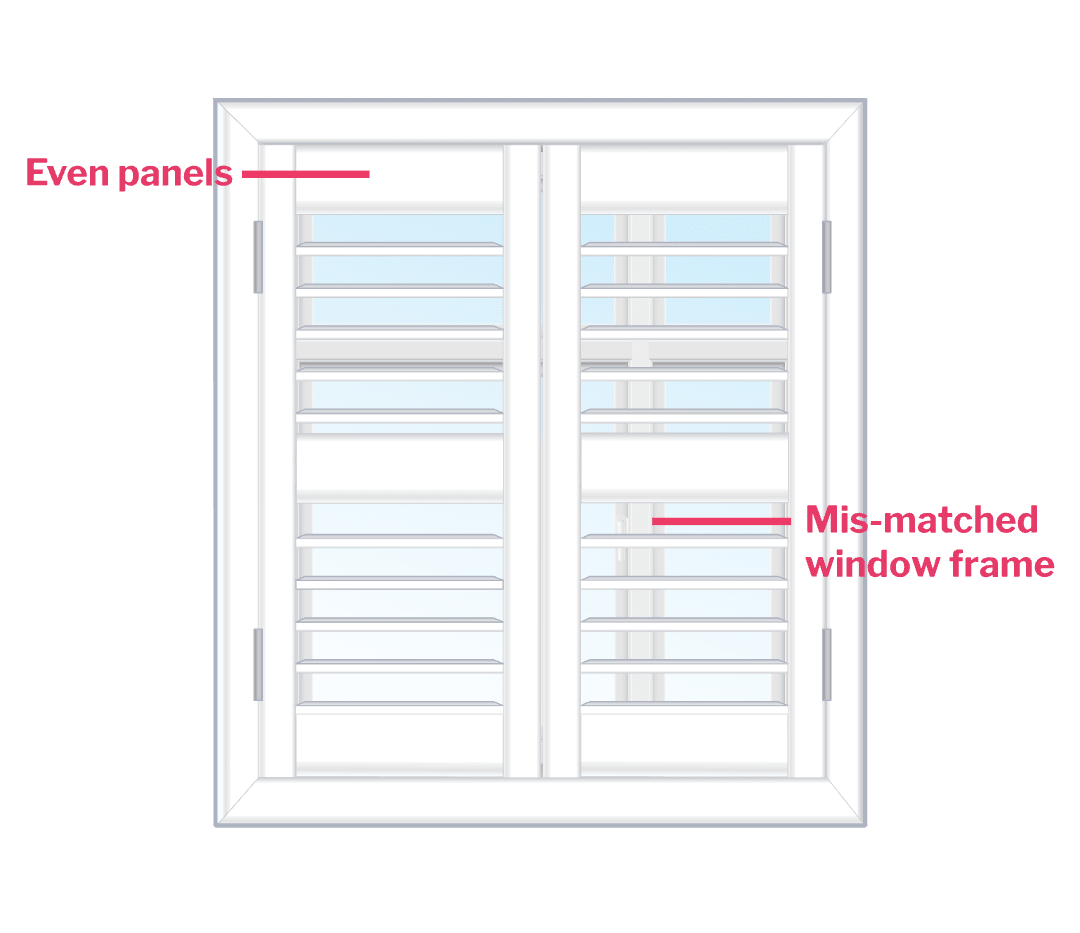
By default your midrail(s) will be spaced evenly if you don't provide measurements. So if you have mullions, the midrail may not line up nicely.

5
Measure for your T posts (3 or more panels)
A

Make a note of how many panels and which hinge combination you'd like. You can use the guide at the bottom of this page for help and remember the less panels, the more light in your home.

B

For three or more panels measure from the left edge of your recess across to the middle point of the vertical mullion your T post will cover and write it down. Then add 40 mm to the measurement you took, to account for your shutter frame on the left side. Refer to our hinge combination guide at the bottom of the page for T posts positions.

Repeat if you want another T post. Start from the left edge and add 40 mm to the measurement you took, to account for your shutter frame on the left side.

C

It looks incredible when T posts line up perfectly with mullions in your window frames. By default your T posts will be evenly spaced if you don't give us measurements. We recommend choosing the least amount of T Posts possible to maximise light.
6
Order your custom shutters online

You're all set to order your shutters!

Design & order

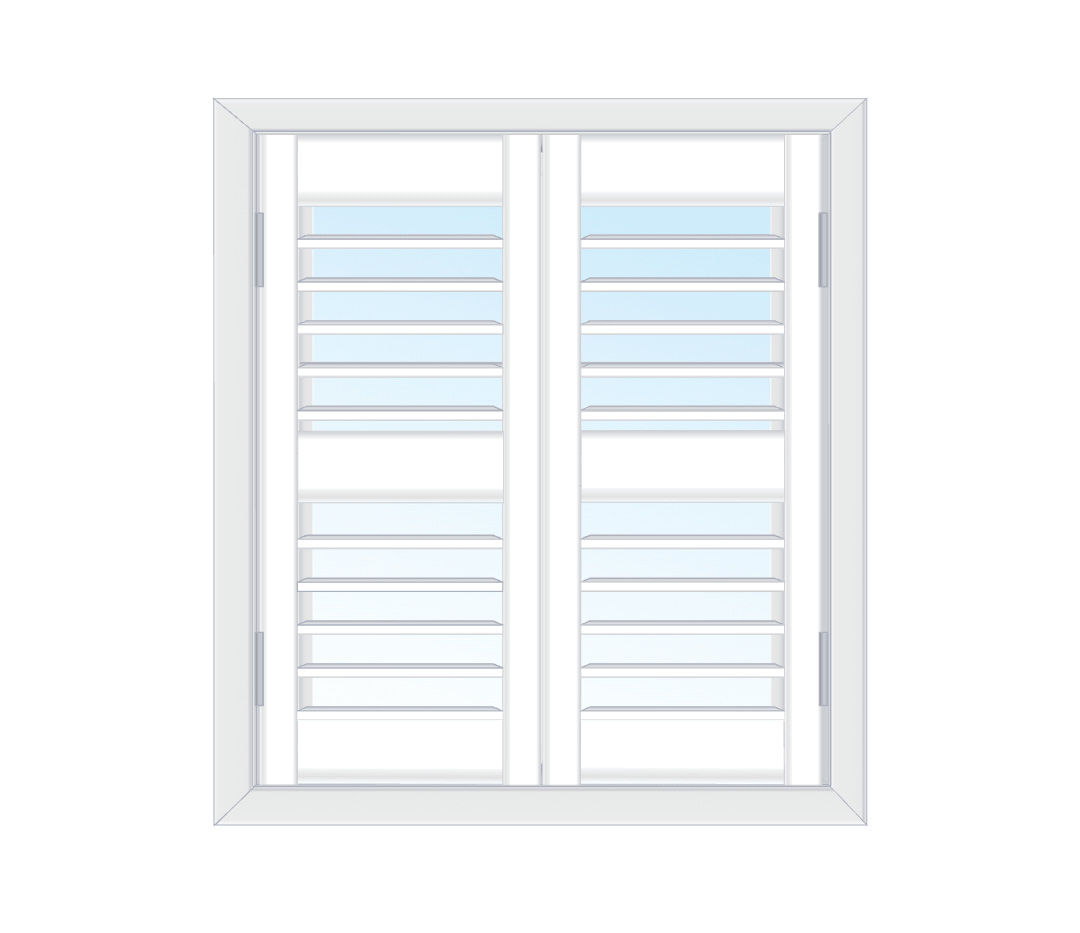
Shutters that attach to the inside of your window frame or recess are called direct mount:

direct mount shutters have no shutter frame
attach directly onto the inside of your window frame or recess
ideal for small and narrow windows to maximise natural light
look fabulous in any room and great for kitchens and bathrooms
customise your midrail position to match your window
match your hinge colour to your shutters, or choose a metal colour to tie in with other features in your home.

1
Check your recess depth

Check that you have a minimum recess depth of 65 mm. If you have obstructions, check the depth is 65 mm from the obstruction out to the edge of your window recess.

2
Measure your width

Measure the exact inside width of your window frame or recess in three different positions: across the top, middle and bottom. Write down the smallest measurement. This measurement will be your shutter panel(s) width. Don’t make any deductions, we’ll do it for you so that you get a perfect fit.

Contact us if your 3 measurements vary by more than 10 mm.

Example: your width measures 610 mm across the top, 611 mm across the middle and 612 mm across the bottom. You'll take the smallest, and write down 610 mm.

3
Measure your drop

Measure the exact inside height of your window frame or recess in three different positions: on the left, in the middle and on the right. Write down the smallest measurement. This measurement will be your shutter panel(s) drop. Don’t make any deductions, we’ll do it for you so that you get a perfect fit.

Contact us if your 3 measurements vary by more than 10 mm.

Example: your drop measures 600 mm on the left, 602 mm in the middle and 604 mm on the right. You'll take the smallest, and write down 600 mm.

4
Measure for your midrail position
A

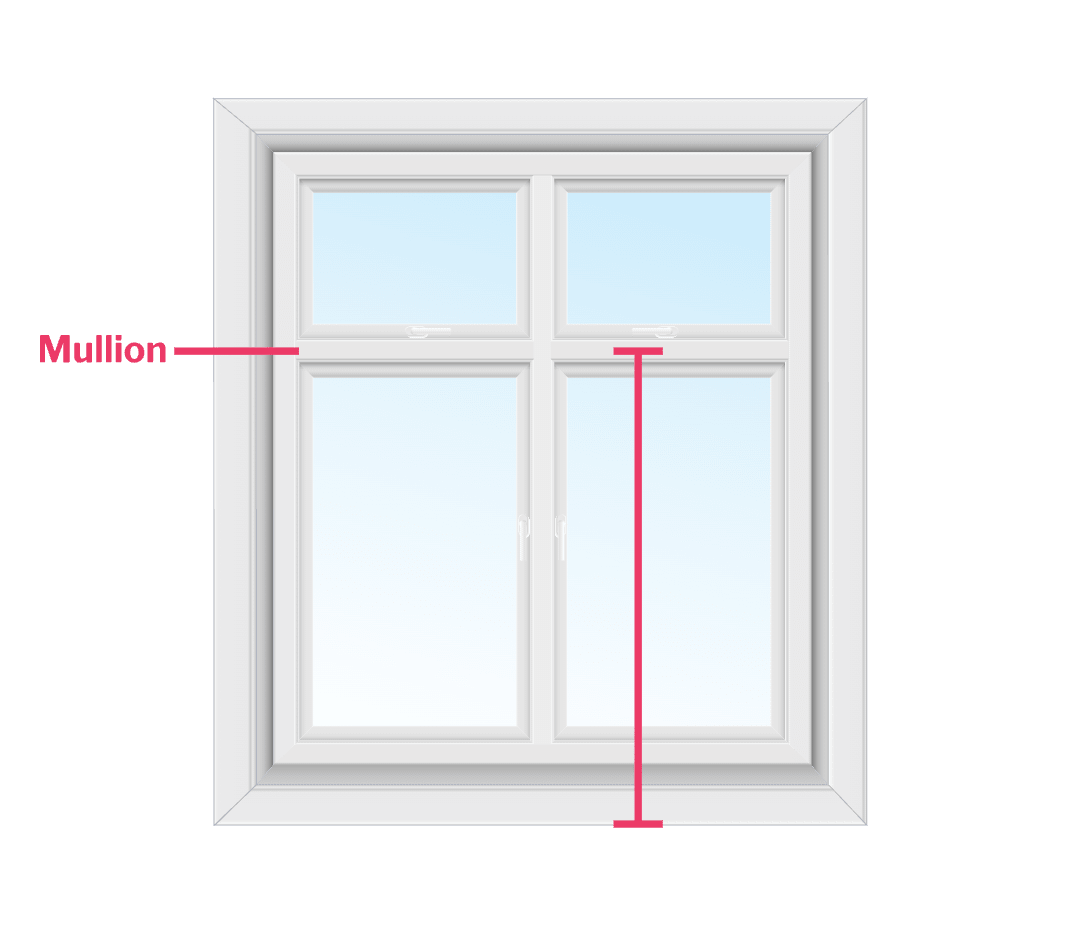
For drops over 1500 mm, measure from the bottom inside edge of your recess, to the mid-point of where you’d like the midrail to sit, and write it down. Position it in line with any horizontal mullions

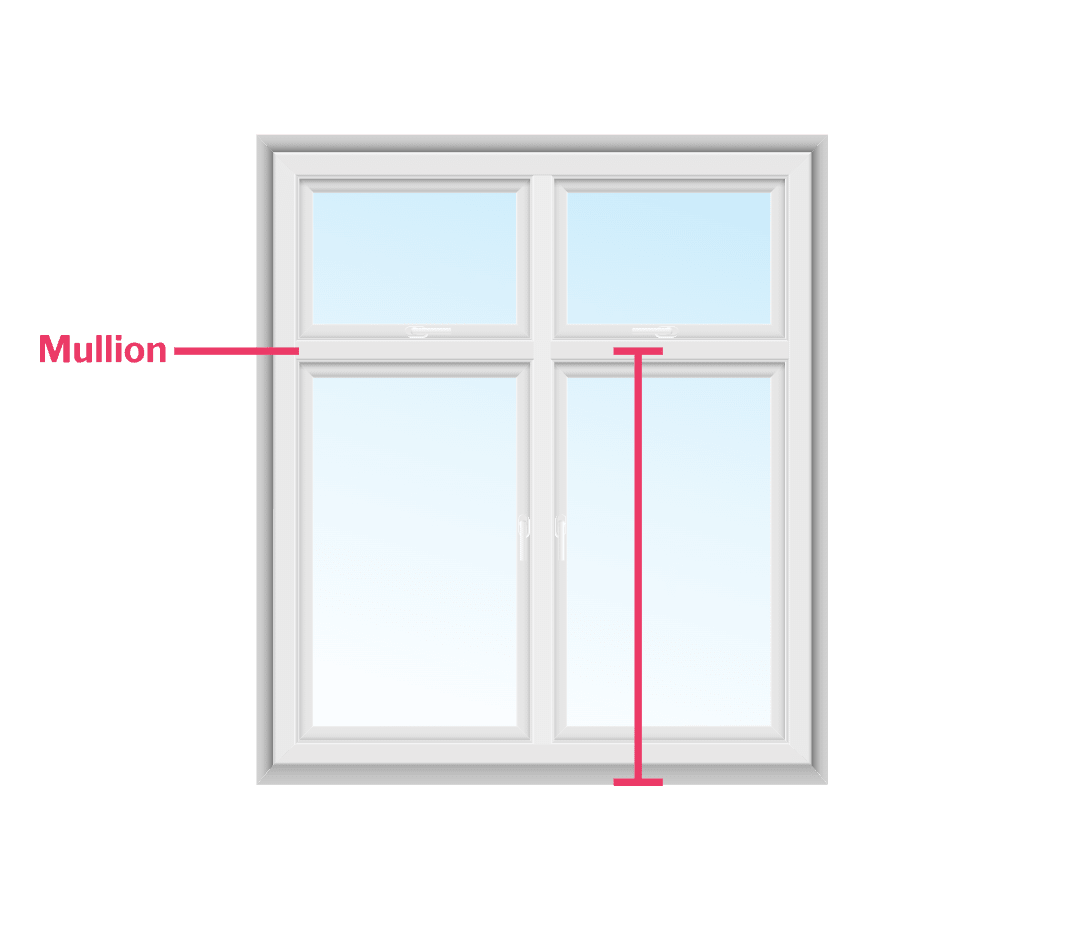
Mullions are the visible bars inside your window frame that are basically dividers between panes of glass. They can be horizontal and vertical.

in the window. If you don't have a mullion, go for a position that's not at eye level.

B

For drops over 2100 mm, you'll need two midrails. First measure from the bottom inside edge of your recess, to the mid-point of where you’d like the first midrail to sit, and write it down. Then repeat for where you’d like the second midrail to sit, and write it down. Position them in line with any horizontal mullions in the window. If you don't have mullions, go for positions that are not at eye level.

C

By default your midrail(s) will be spaced evenly if you don't provide measurements. So if you have mullions, the midrail may not line up nicely.

5
Measure for your T posts (3 or more panels)
A

Make a note of how many panels and which hinge combination you'd like. You can use the guide at the bottom of this page for help and remember the less panels, the more light in your home.

B

or three or more panels measure from the left inside edge of your recess across to the middle point of the vertical mullion your T post will cover and write it down. Refer to our hinge combination guide at the bottom of the page for T posts positions. Repeat if you want another T post and start from the left edge.

C

It looks incredible when T posts line up perfectly with mullions in your window frames. By default your T posts will be evenly spaced if you don't give us measurements. We recommend choosing the least amount of T Posts possible to maximise light.
6
Order your custom shutters online

You're all set to order your shutters!

Design & order

Our hints and tips

Want to know our top tips for measuring up like a pro?

Give us your measurements in millimetres (mm)
Double check all of your measurements before you order
Always write down 'width' and 'drop' next to your measurements, so you don't reverse them by accident!
Only give us the exact measurements we ask for. Our team custom makes your shutters to fit your windows. They make standard deductions to account for your frames, so you don't have to.
Measure every window.
The beauty of houses is that each window may have slight variations in size, and we want all your shutters to fit perfectly.
We know every home is unique, and for some extra help deciding on your perfect fit, contact us.

Choose the perfect panel and hinge combination for your window.

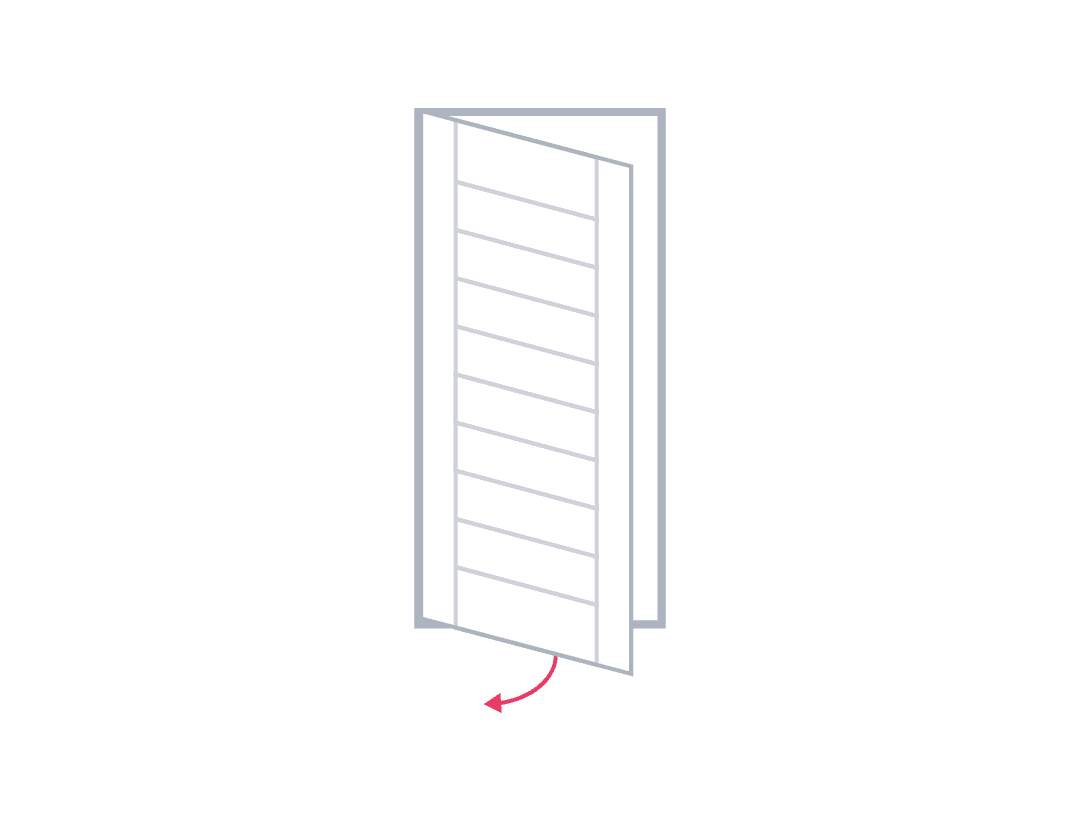
Select how many shutter panels you'd like and choose your perfect hinge combination so each panel opens in the direction you want. The number of panels you can choose depends on your window frame width and style. We recommend choosing the least amount of panels possible to maximise sunlight.

  • 1 panel: for window widths less than 950 mm

  • 2 panels: for window widths between 600 mm to 1850 mm

  • 3 panels: for window widths between 900 mm to 2750 mm

  • 4 panels: for window widths between 1200 mm to 3600 mm

  • 6 panels: for window widths between 1800 mm to 3600 mm
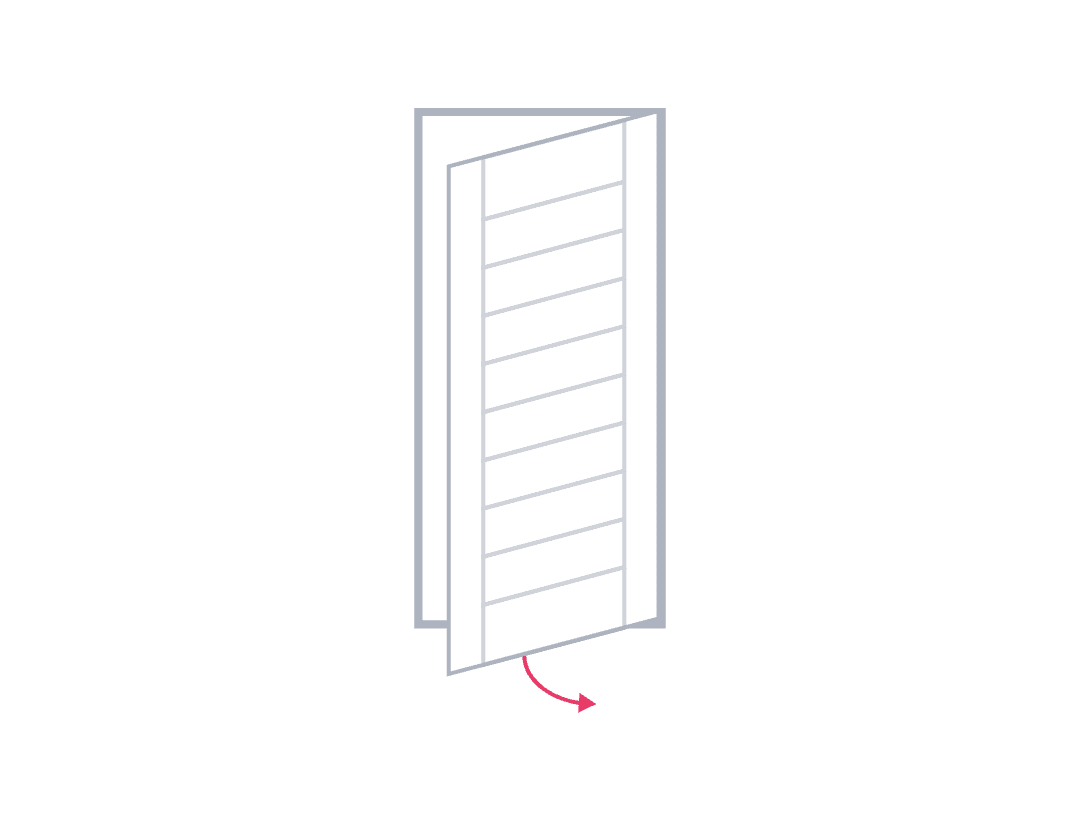
A

1 panel - Hinge: left
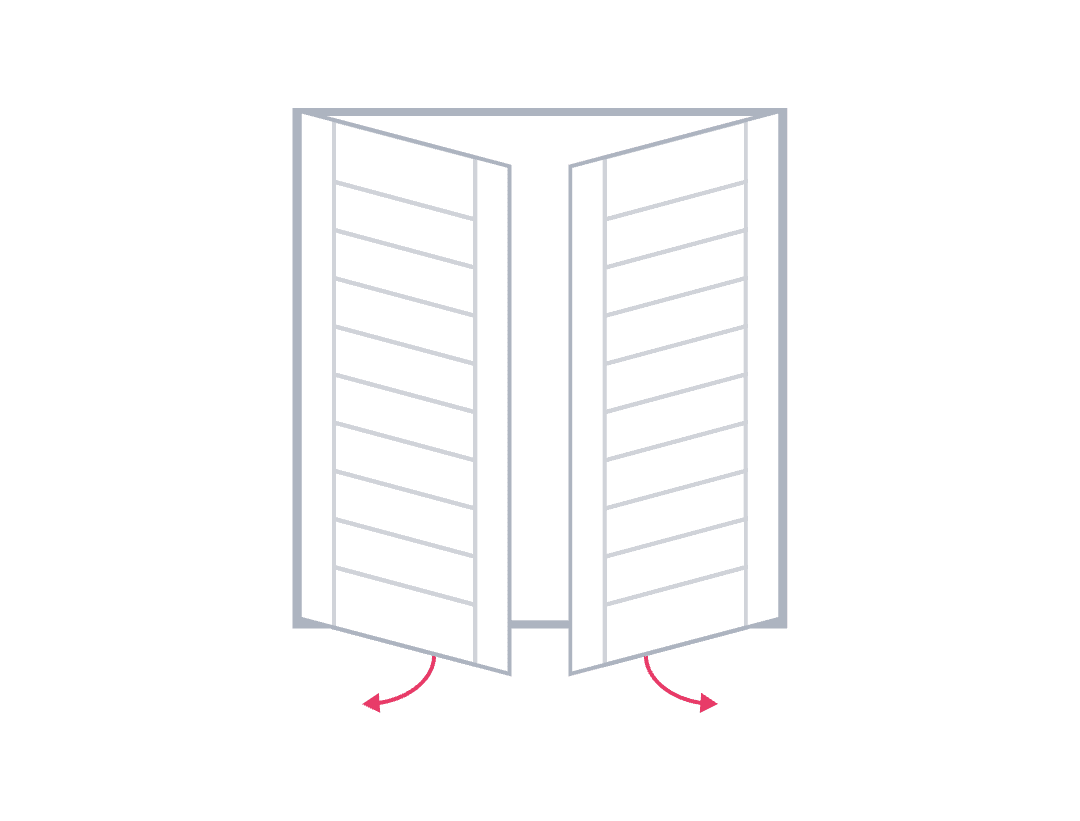
B

1 panel - Hinge: right
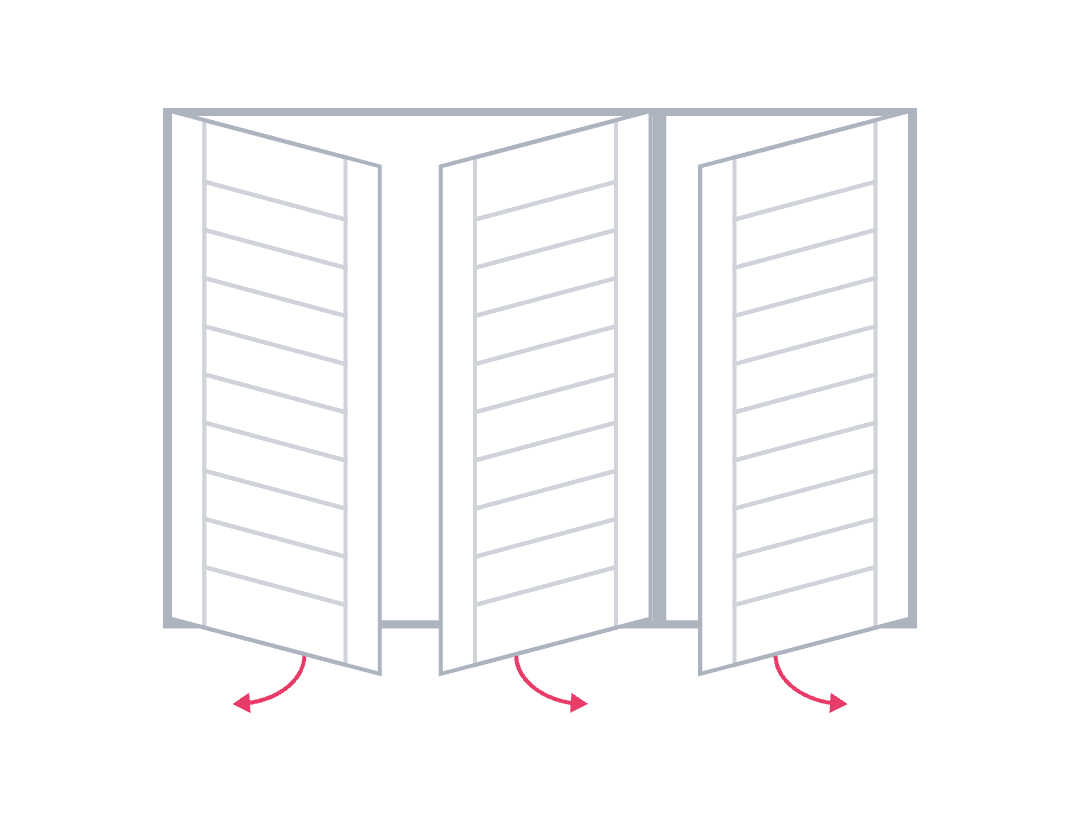
C

2 panels - Hinge combination: left, right
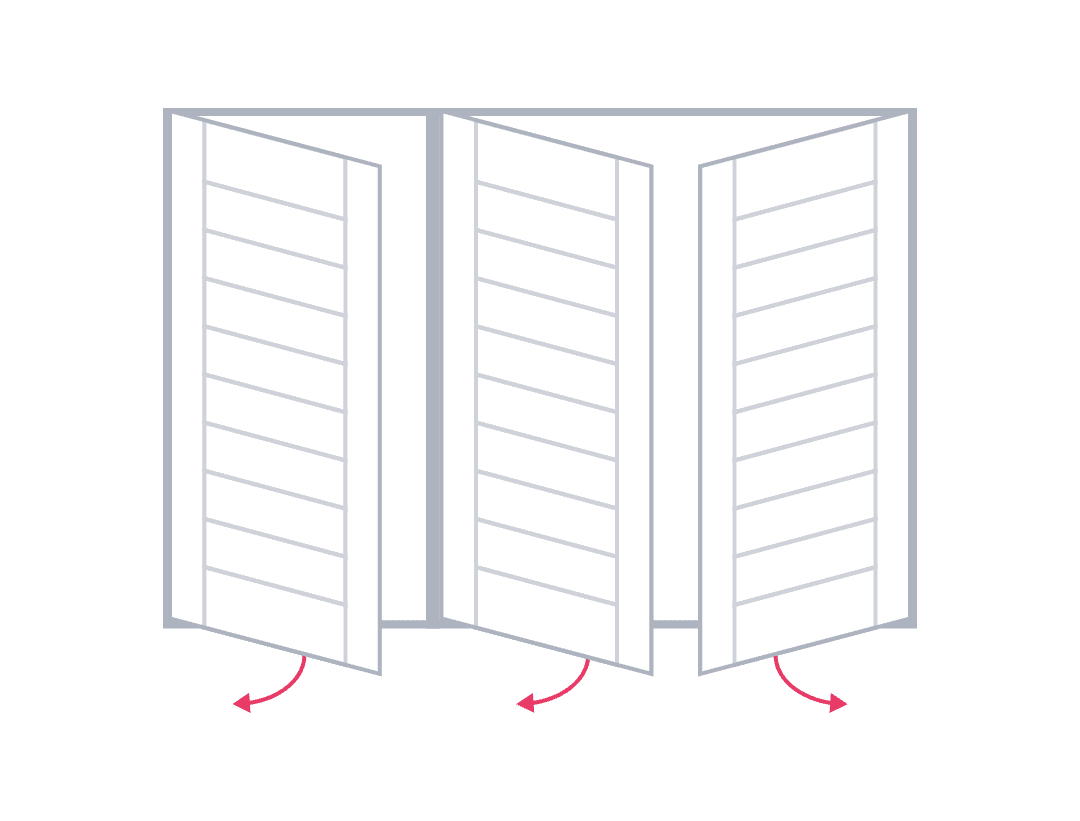
D

3 panels - Hinge combination: left-right, T-post, right
E

3 panels - Hinge combination: left, T-post, left-right

F

3 panels - Hinge combination: left, T-post, left, T-post, left
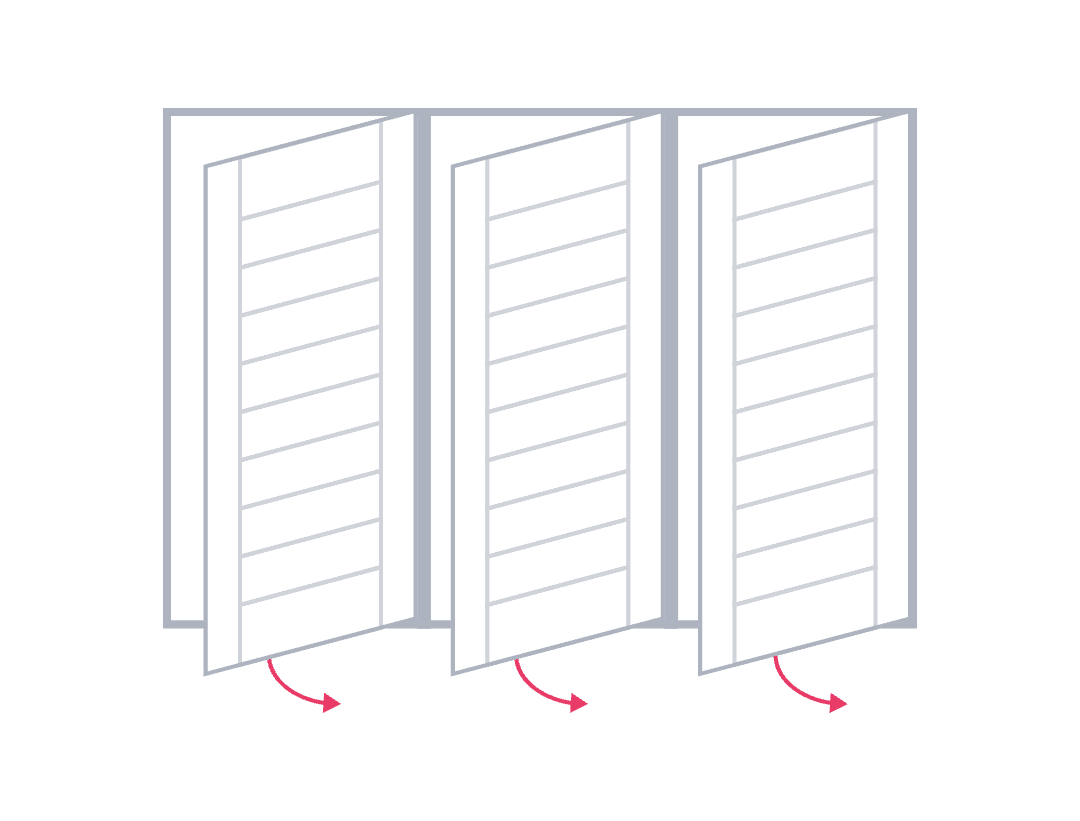
G

3 panels - Hinge combination: right, T-post, right, T-post, right
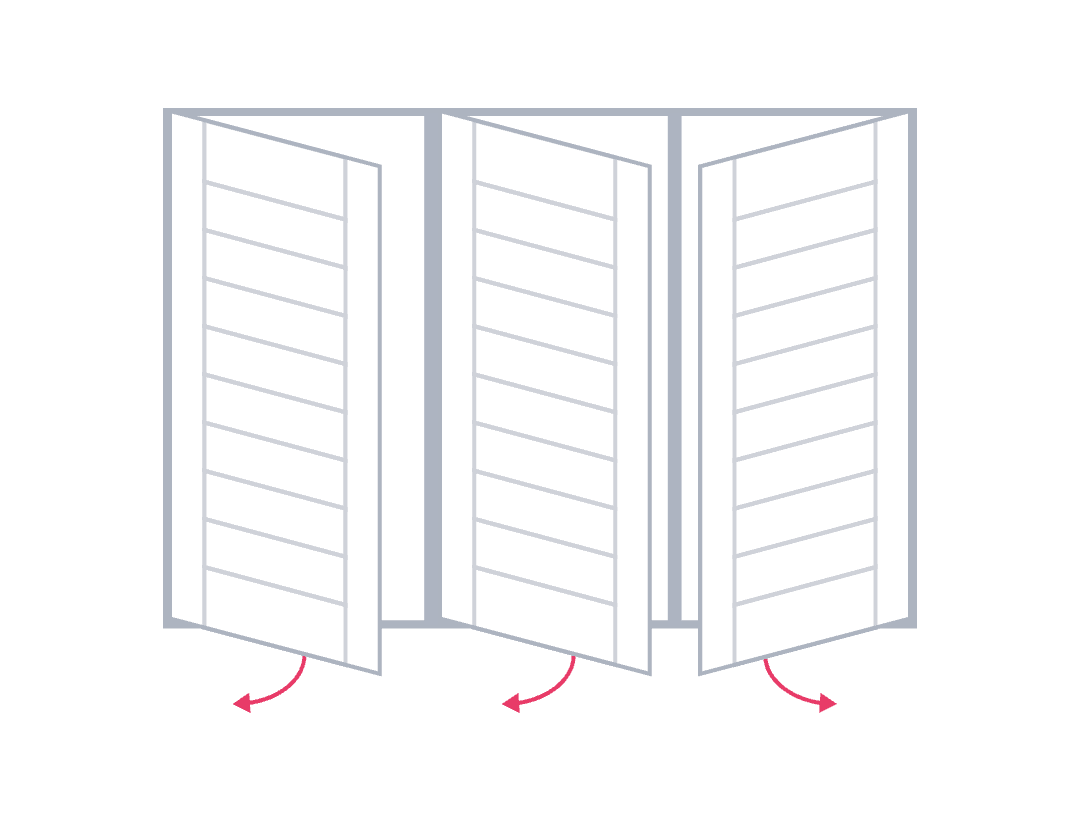
H

3 panels - Hinge combination: left, T-post, left, T-post, right

I

Hinge combination: left, T-post, right, T-post, right

J

4 panels - Hinge combination: left-right, T-post, left-right
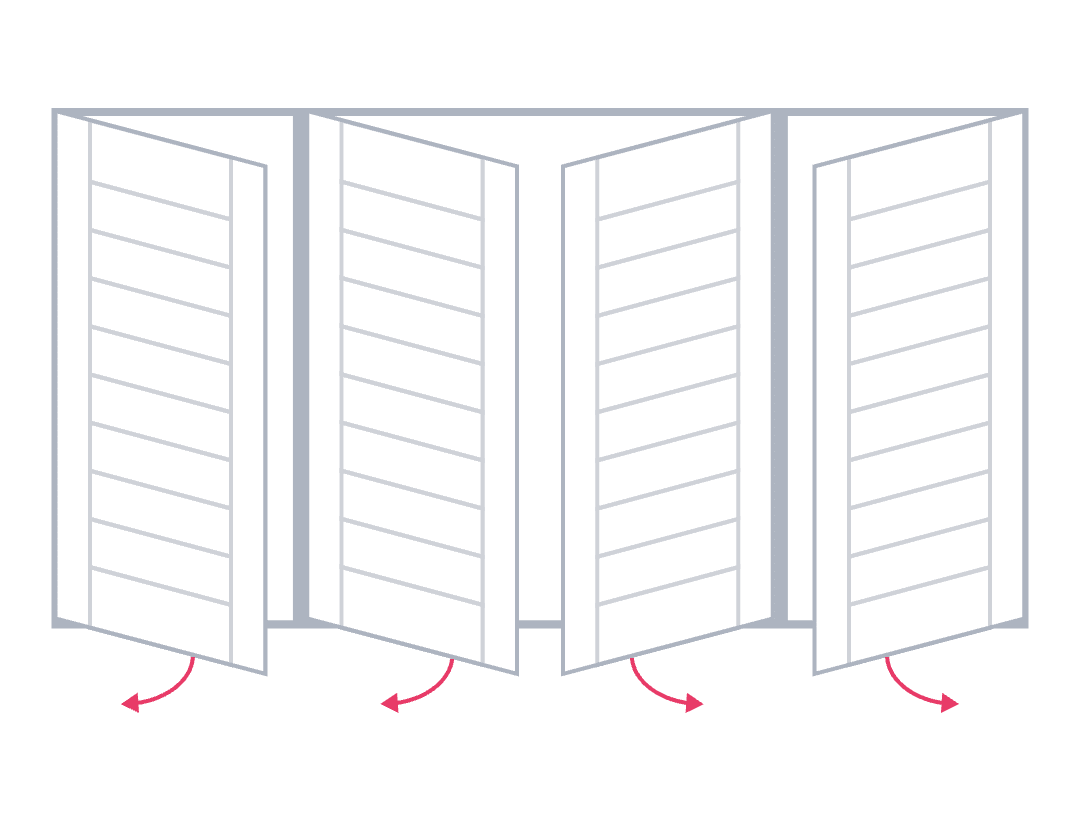
K

4 panels - Hinge combination: left, T-post, left-right, T-post, right
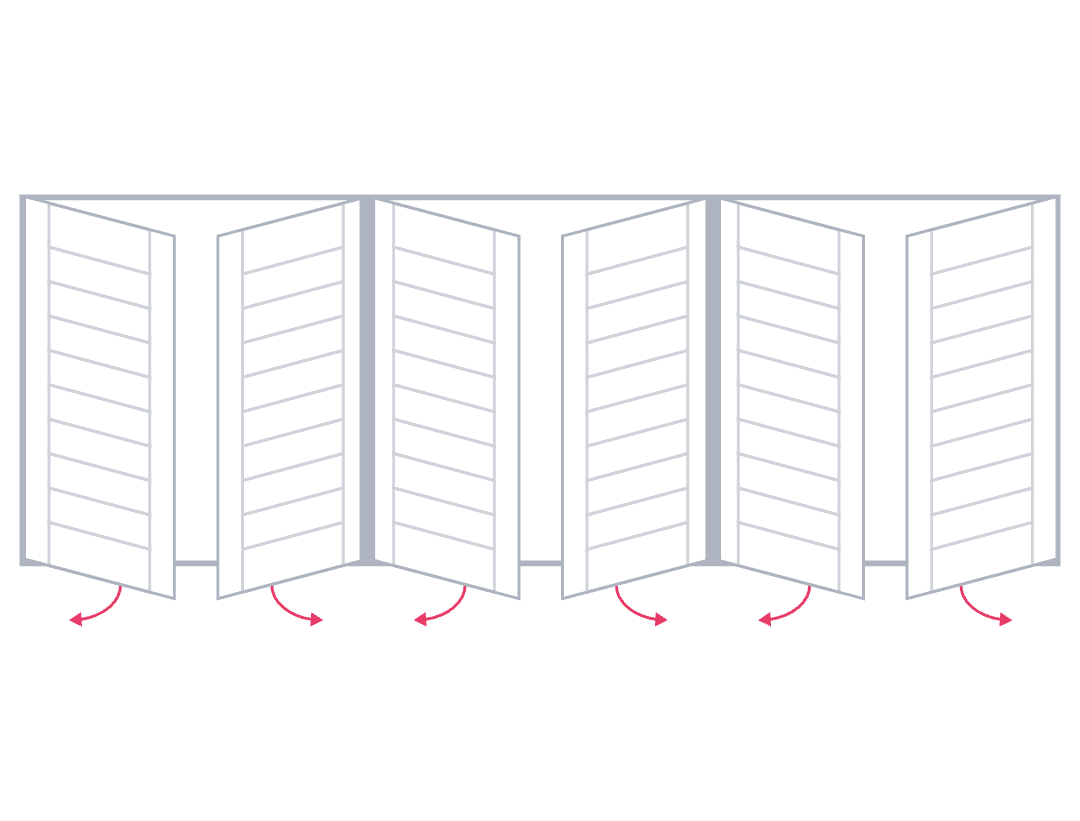
L

6 panels - Hinge combination: left-right, T-post, left-right, T-post, left-right
Ready to install?

How to install shutters

View step by step guide for how to install shutters here.

How to install shutters
We’re here to help with any questions
Support

We’re here to help with any questions

Whether you're midway through installing your blinds or just getting started, our team is here to help. From measuring guides to installation tips, we’ve got answers to make things simple and stress-free. Contact us on 1300 918 390 (AEDT).